If you’re reading this, chances are you’ve at least thought about doing a triathlon—and maybe you’re wondering whether it’s actually realistic for you. The good news: it absolutely is. Learning how to train for your first triathlon doesn’t require elite fitness, fancy gear, or a lifetime background in endurance sports. It requires a clear plan, realistic expectations, and an understanding of what actually matters for beginners.
It’s completely normal to feel overwhelmed at the start. You’re taking on three sports, unfamiliar terms, and a new type of race day experience all at once. We get it—because we’ve been there.
Let's strip away the noise and give you a calm, confidence-building roadmap for training for a triathlon in 2026.
Why Trust Us?
ACTIVE.com's editorial team relies on the knowledge and experience of fitness and wellness experts, including competitive athletes, coaches, physical therapists, nutritionists, and certified trainers. This helps us ensure that the products we feature are of the highest standard. Collectively, the team has spent countless hours researching equipment, gear, and recovery tools to create the most accurate, authentic content for our readers. Customer satisfaction is also a key part of our review process, which is why we only feature highly rated products.
Key Takeaways
By the end of this guide, you’ll understand:
- How much time a beginner really needs to train each week
- The core skills that matter most in swim, bike, and run training
- How to structure a simple, sustainable training plan
- The biggest beginner mistakes—and how to avoid them
- What gear you actually need (and what you don’t)
- How to fuel your body with the proper carbohydrate strategy
- How to stay consistent, confident, and calm heading into your first race
What Is a Triathlon and What Should Beginners Expect?
A triathlon is an endurance event made up of three disciplines completed back-to-back: swimming, cycling, and running. For beginners, the goal isn’t speed—it’s steady forward progress and reaching the finish line feeling proud of what you’ve accomplished.
Most first-timers are surprised to learn that triathlons are far more welcoming than they appear from the outside. You’ll see athletes of all ages, backgrounds, and abilities—many doing their first triathlon just like you.
The Basic Tri Structure: Swim, Bike, Run (Tri Explained)
Triathlons come in four main distances. Sprint triathlons are the shortest, followed by Olympic-distance triathlons, then half-Ironman 70.3s, and finally full Ironman triathlons.
A tri always follows the same order:
- Swim leg (750 meters - 2.4 miles): Typically done in open water or a pool. Focus is on staying calm, breathing, and swimming straight—not speed
- Bike leg (12 - 112 miles): The longest part of the day for most athletes. Can be done on a road bike, hybrid, or even a mountain bike
- Run leg (3.1 - 26.2 miles): Usually the most challenging because it comes last. The goal is steady movement, not a fast pace
This structure stays the same whether you’re doing a sprint triathlon or an ironman—only the total distance changes.
How to Train for Your First Triathlon as a Beginner
The key to learning how to train for your first triathlon is understanding that you don’t need to do everything perfectly. You need to do the right basics consistently.
How Much Time You Really Need to Train for Your First
Most beginners start with sprint or Olympic-distance triathlons and can train successfully with 4–8 hours per week. Example triathlon training plan weekly schedule:
- 2-3 swims of 30-60 minutes
- 1 short, intense bike ride to build up speed for 30-60 minutes
- 1 long, low-intensity bike ride of 60 minutes to 3 hours
- 1 short, intense run to build up speed for 30-60 minutes
- 1 long, low-intensity run ride of 25 minutes to 1.5 hours
- 1 brick run immediately after a bike ride of 5-30 minutes
Consistency matters far more than volume. The best rule of thumb for how much you should train is to train as much as you can. Assuming you have to train for two years straight, it can hold you back and often lead to burnout.
Building a Simple Training Framework for Your First Triathlon
A good framework focuses on skills, endurance, and repeatability.
How to Prepare for the Triathlon Swim
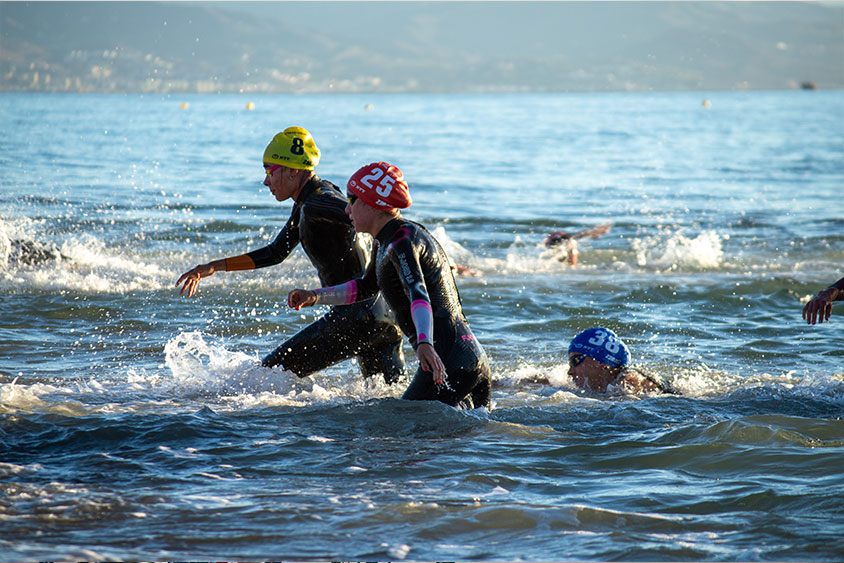
For most beginners, the swim feels intimidating—but success in the swim portion of your first triathlon comes from skills, not speed.
Focus on three essentials:
- Breathing: Fully exhale underwater, then take a quick, relaxed in-breath to avoid panic.
- Floating: Learn to stay high in the water by relaxing your upper and kicking lightly.
- Swimming straight (sighting): Practice briefly lifting your eyes forward while swimming—this is critical for swimming in open water.
Short, frequent swim sessions (20–40 minutes, 2–3x per week) using simple breathing, kicking, and sighting drills will prepare you far better than chasing distance.
How to Prepare for the Triathlon Bike Leg
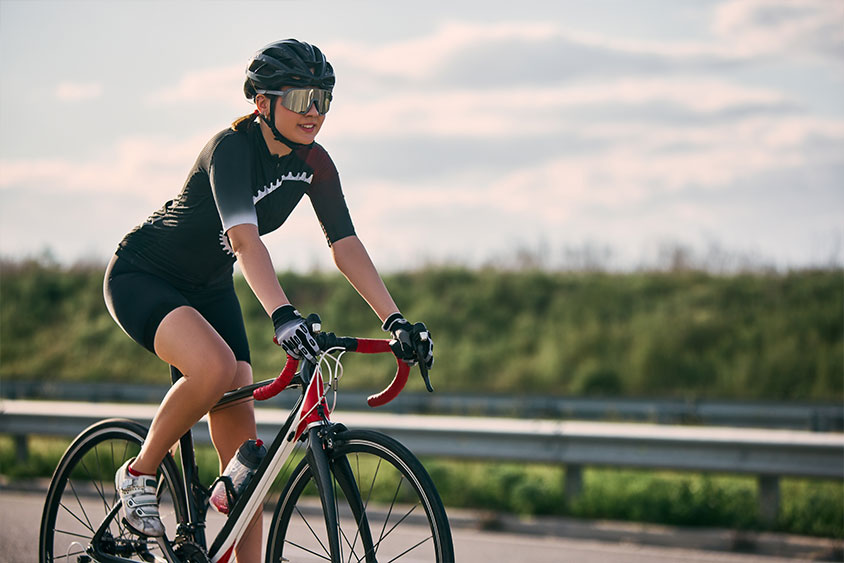
The bike is about endurance and the ability to hold a steady speed, not fancy gear. Any reliable cycle—road bike, hybrid, or mountain bike—is enough.
Two things matter most:
- Endurance: Build one long bike ride each week, increasing it by about 8–10% at an easy effort. This teaches your body to stay comfortable and fuel properly.
- Speed comfort: Add one interval session per week, starting with short efforts (30 seconds–2 minutes) and plenty of recovery, gradually progressing over time.
If you can ride steadily and calmly, you’re ready.
How to Prepare for the Triathlon Run Leg
Run prep mirrors bike prep—with one key difference.
- Build endurance gradually: Increase your longest run by 8–10% per week at an easy pace. Walking breaks are fine.
- Learn to run off the bike: Once per week, do a short brick run (5–30 minutes) immediately after cycling to teach your legs how to transition.
Comfortable running shoes matter more than anything else.
How to Nail Your Triathlon Nutrition
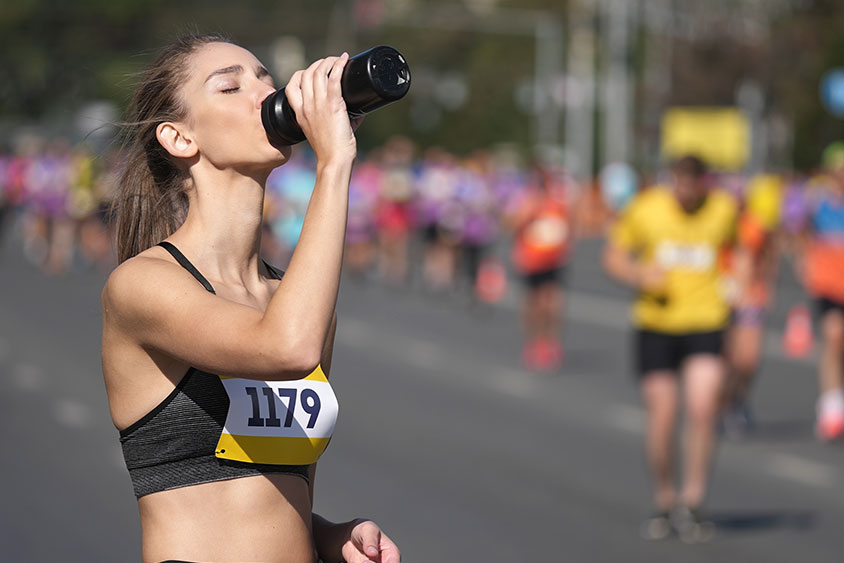
Nutrition is personal and must be practiced.
Consistency beats perfection—and that’s how you reach the finish line feeling strong.
What Gear You Actually Need to Train for Your First Triathlon
You don’t need much to start. Here is a minimal beginner-friendly gear list.
Swim
- Comfortable mirrored goggles to reduce glare from the water
- Basic swimsuit
- Optional wetsuit if allowed and needed
Bike
- Any reliable bike
- Helmet
- Flat repair kit
Run
- Properly fitted running shoes
- Moisture-wicking clothing
Clothing
You can splurge on a triathlon suit, but it's an added expense and not required. A good hack is to train in triathlon bike shorts and cycling jerseys because you can wear these items both in training and in the race.
Bringing It All Together
Training for your first triathlon is about simplicity, consistency, and confidence. Focus on learning basic swim skills, building steady bike and run endurance, practicing nutrition, and showing up week after week. That’s it.
Beginners succeed every year—not because they’re special, but because they follow a smart, sustainable approach. You can do this.
About the Author
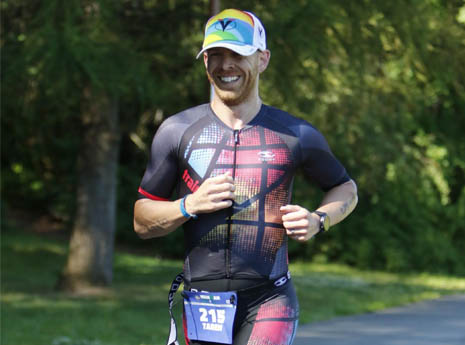
Taren Gesell was a leading global voice in triathlon, publishing the Triathlon Foundations book series and hosting the world’s largest triathlon podcast. He is a former world-ranked triathlete, record-setting marathon swimmer, and founder of the voice-AI training app MOTTIV.
Get ACTIVE on the Go

Couch to 5K®
The best way to get new runners off the couch and across the finish line of their first 5K.
Available for iOS | Android




Discuss This Article