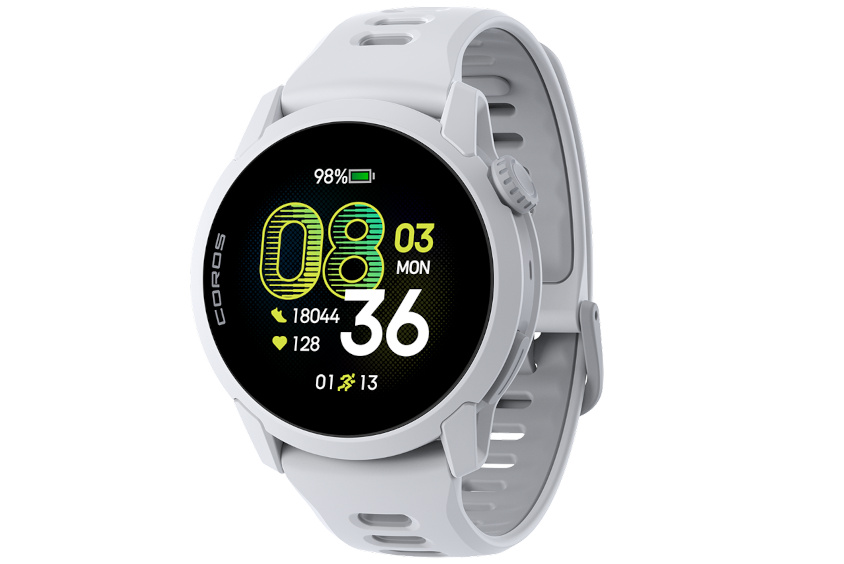
If you’re looking for a purpose-designed multiport smartwatch, there is no shortage of options. Even if you already have a smartwatch, our picks for triathlon watches highlight the strengths of the latest sport tech for serious triathletes and multisport enthusiasts.
Why Trust Us?
ACTIVE.com's editorial team relies on the knowledge and experience of fitness and wellness experts, including competitive athletes, coaches, physical therapists, nutritionists, and certified trainers. This helps us ensure that the products we feature are of the highest standard. Collectively, the team has spent countless hours researching equipment, gear, and recovery tools to create the most accurate, authentic content for our readers. Customer satisfaction is also a key part of our review process, which is why we only feature highly rated products.
Multisport wearable or smartwatch?
What defines and differentiates a multisport wearable from an everyday smartwatch? For one, the ability to record a multi-discipline session, a brick workout to a triathlon, all as a single file.
General-use smartwatches like the Google Pixel offer phenomenal features for everyday activities, alerting you to abnormal biometric readings and integrating natively with a mobile phone. But most of these devices fall short in key areas important to triathletes and may require stopping the watch from monitoring one activity before starting a new one. Even the Apple Watch Ultra—which offers cellular network connectivity and U.S. FDA 510(k) clearance for biometric monitoring—comes up short in meaningful ways, such as battery life and sport-specific data, compared with similarly priced offerings from Garmin, Polar, Coros, and Suunto.
Battery life measured on a calendar
Another defining characteristic of a sports wearable that many smartwatches lack is segment-defining battery life. This is especially important when competing in full-distance triathlon events with 17-hour cutoff times. General-use wearables measure battery life in hours, and some even offer fast charging. Multisport wearables need to go the distance, with GPS and accessory receivers enabled, and not die mid-race.
What multisport watch features are must-haves?
Training with power on the bike and using a footpod or chest strap to enhance running data is a must. While devices from Samsung, Apple, and Google can connect to some external sensors, optimal functionality and power management are not optimized for simultaneously handling external sensors.
All of the wearables in this roundup offer AMOLED (Active-Matrix Organic Light-Emitting Diode) displays that are bright enough for use in midday sun, with either Corning Gorilla Glass or a sapphire crystal for maximum scratch-resistance and durability.
Our list of wanted features also includes automatic swim stroke and turn detection for pool swimming, and indoor running and cycling modes. Other features and functions of these wearables we wanted to see were the ability to natively track sports other than swim, bike, and run; many multisport athletes hit the gym, hike, cross-country ski, practice yoga, and more.
All the devices in this group integrate with proprietary mobile apps for device configuration, data collection, and workout programming, as well as Strava and TrainingPeaks. Also, all of the surveyed devices track sleep and provide feedback on recovery effectiveness and readiness for training and racing, much like the Whoop strap and Ōura ring.
We also wanted to include devices available in more than a single, one-size-fits-most option. And some of the devices in this roundup offer a touchscreen interface, but this was not a deciding factor.
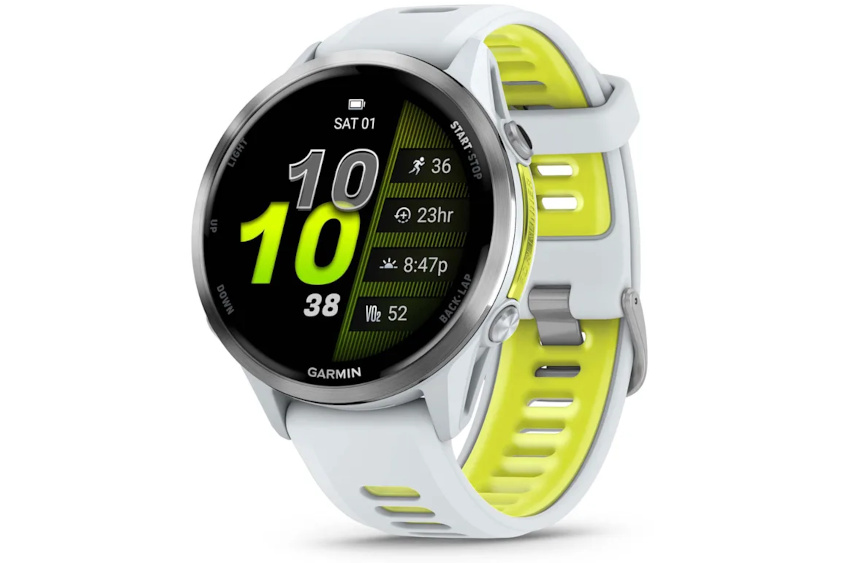
Garmin Forerunner 970
- Price: $749
- Weight (claimed): 56g (titanium body enclosure)
- Size(s): 47mm
- Battery Life (claimed): 15 days smartwatch mode, 21 hours GPS
- Display Type: AMOLED with touchscreen
- Connectivity: BTLE, ANT+, WiFi
Setting a high standard for the class, the Garmin Forerunner 970 may offer the most features in a multisport wearable for less than $800. It has nearly the same internals as the much more expensive Fenix 8, but eschews a diving enclosure and a few other halo features not crucial for triathlon.
The Garmin 970 packs an adjustable-brightness AMOLED display with a touchscreen interface, an LED flashlight (for visibility in low light), the latest wrist-based optical sensors for monitoring heart rate, pulse oximetry, skin temperature, and plenty of metrics to satisfy the most data-obsessed athletes and their coaches. On-board sensors even provide feedback about running stride and swim stroke efficiency. And Garmin is one of the few manufacturers that still allows external devices to connect via the ANT+ protocol, which means older sensors can still be used with it.
Using the mobile app, one can customize watch faces and data fields, set up contact lists for incident detection, tune settings to maximize battery life, and view training and race data. Standout features are the impact load and running tolerance metrics, which help guide training and recovery post-run and can be viewed in the mobile app or in a web browser.
The Forerunner 970 is available in three different case colors and nine strap colors. One of the very few drawbacks of the 970 is its availability only in the 47mm size.
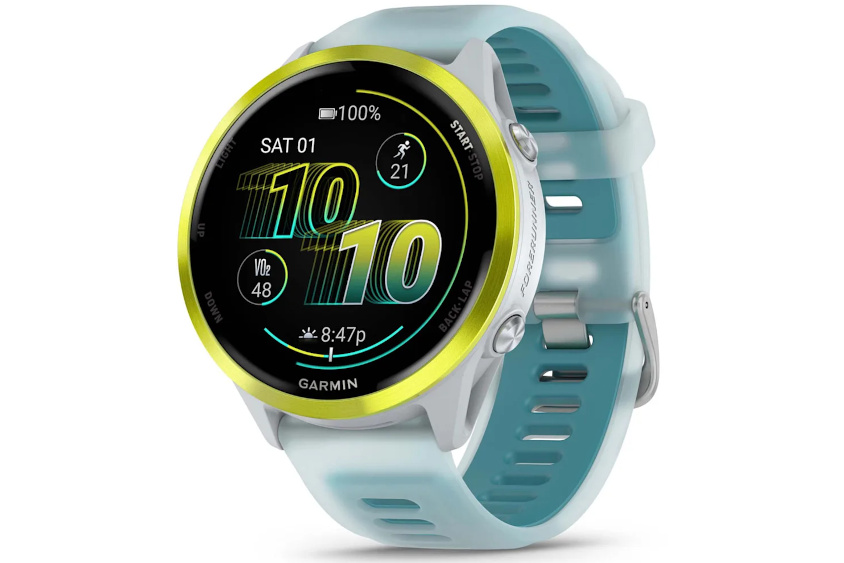
Garmin Forerunner 570
- Price: $549
- Weight (claimed): 42g, 47g
- Size(s): 42mm, 47mm
- Battery Life (claimed): 11 days smartwatch mode, 14 hours GPS
- Display Type: AMOLED with touchscreen
- Connectivity: BTLE, ANT+, WiFi
The Garmin Forerunner 570 is very similar to the Forerunner 970, with a few distinctions. The Garmin 570 has an aluminum bezel, and unlike the more expensive model, it is available in 42mm and 47mm sizes. It’s also available in six colors, and one can select from 38 different strap colors and materials. It should be noted that the smaller version has a smaller battery.
In addition to the brilliant AMOLED touchscreen display, a built-in speaker and mic allow phone calls when the 570 is linked to a compatible device. The Elevate Gen5 optical HR sensor is an improvement over previous tech, but we still like to pair our wearables with a chest strap HRM for the most accurate data.
Some notable onboard features for triathletes (and runners) include a pace predictor that analyzes historical run data to offer reasonably accurate racing targets for specific courses and distances. Also of note for multisport athletes are Garmin’s AI-based triathlon coach and structured custom workouts for triathletes. These tools can be accessed through the Garmin mobile app, which seamlessly syncs info between the 570 and a cloud-based account on your mobile phone.
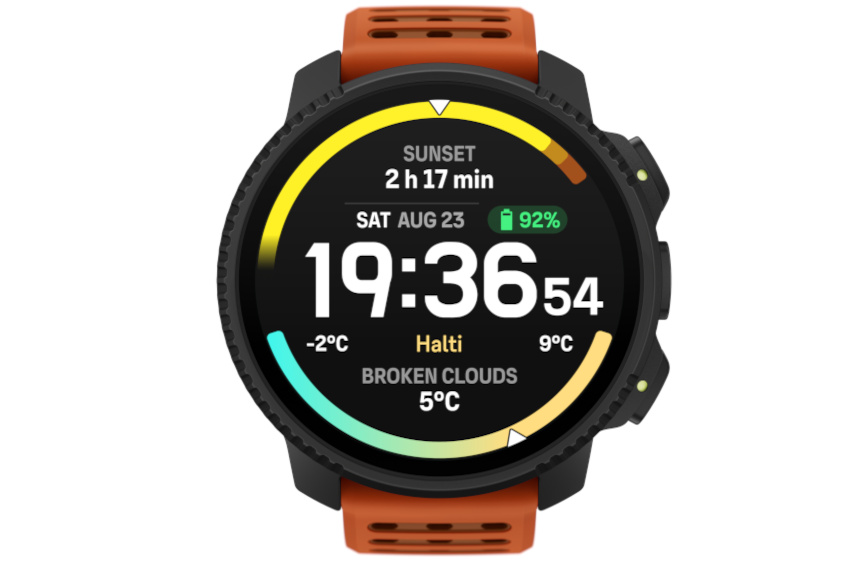
Suunto Vertical 2
- Price: $599
- Weight (claimed): 87g
- Size(s): 48mm
- Battery Life (claimed): 20 days smartwatch mode, 65 hours GPS
- Display Type: AMOLED
- Connectivity: BTLE, WiFi
The Suunto Vertical 2 battery life is one of the reasons why it makes our list. When set for modest GPS use, some users may get as much as 60 hours! That’s nearly twice the expectancy of most other wearables. The Vertical 2 might be the best bet if you’re focused on 70.3 and longer events.
A change from previous generations of multisport wearable devices developed by the Vantaa, Finland-based Suunto, the Vertical 2 is only available with an AMOLED display, which makes the battery tech even more impressive (MIP displays perform better in battery life tests). The addition of an LED flashlight is great for finding socks in a drawer with the lights off without disturbing anyone in a shared space, and being seen while running in low-light conditions.
Like most other recent multisport watches, the Vertical 2 can be used for other sports—Suunto boasts more than 115 activities—and integrates with a mobile app to view data summaries and visualizations, change settings, and update configuration profiles. Like Garmin, this Suunto wearable is equipped with WiFi, which is best for device firmware updates.

Polar Vantage M3
- Price: $499
- Weight (claimed): 53g
- Size(s): 45mm
- Battery Life (claimed): 7 days smartwatch mode, 30hrs GPS mode
- Display Type: AMOLED with touchscreen
- Connectivity: BTLE
Polar was the undisputed king of heart rate monitor wearables in the late 1980s through the early aughts. A few competitors’ tech leapfrogged ahead of the Finnish developer of sport-focused watches that measure biometrics. Still, with the Vantage M3, Polar solidified its place among the best-in-class sports wearables.
The accurate optical heart rate sensor provides high-quality data, which can be further enhanced with a Polar H10 chest strap, yielding clinical research-quality data. A stainless steel bezel and a scratch-resistant Gorilla Glass crystal atop a bright, crisp AMOLED display with a touchscreen make for a durable package.
The Vantage M3 is available in two colors, with three different strap color choices. We think this triathlon watch is an excellent choice for existing Polar users who want to up their game, while keeping the familiar Polar functionality.
Coros PACE 4
- Price: $249
- Weight (claimed): 40g
- Size(s):
- Battery Life (claimed): 19 days smartwatch mode, 14 hours GPS
- Display Type: AMOLED with touchscreen
- Connectivity: BTLE, WiFi
If you’re in the market for a triathlon watch and budget is an important consideration, we think the Coros PACE 4 should be on your list. Not only is the PACE 4 light on your wallet, it’s also light on your wrist, too, at just 40g. This is impressive given the battery requirements to keep this watch running for nearly three weeks between charges in smartwatch mode.
Tri-specific features we like include a race predictor, a running fitness rating, training load metrics, ECG and pulse ox data, and improved GPS functionality for open-water swimming. While the Coros PACE 4 doesn’t support ANT+ for connecting to external sensors like HRM straps and power meters, the BTLE pairing feature is reliable and should work for most users and late-gen devices. Onboard WiFi can be used for device updates.
This Coros wearable features a microphone (curiously, no built-in speaker) for taking audio notes about training and racing—a unique feature among these devices. Customizable watch faces and widgets allow for personalization through a well-thought-out mobile app, which is great given the relatively lower price point.
By clicking on the product links in this article, we may receive a commission fee at no cost to you, the reader. Sponsorships and affiliate commissions help support our research so we can help you find the best products. Read full affiliate disclosure here.
About the Author

Get ACTIVE on the Go

Couch to 5K®
The best way to get new runners off the couch and across the finish line of their first 5K.
Available for iOS | Android



Discuss This Article