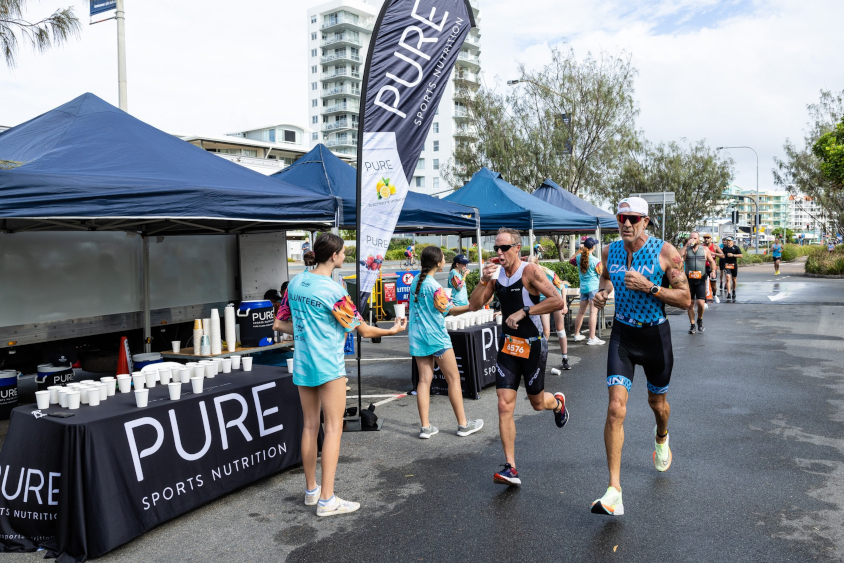
While it almost seems contradictory to suffer from dehydration in a triathlon, starting immersed in water, it’s a risk that shouldn’t be ignored.
Why Trust Us?
ACTIVE.com's editorial team relies on the knowledge and experience of fitness and wellness experts, including competitive athletes, coaches, physical therapists, nutritionists, and certified trainers. This helps us ensure that the products we feature are of the highest standard. Collectively, the team has spent countless hours researching equipment, gear, and recovery tools to create the most accurate, authentic content for our readers. Customer satisfaction is also a key part of our review process, which is why we only feature highly rated products.
Sweat loss greater than two percent of your body mass can have a significant detrimental effect on your performance. Not only could you spiral into overheating more quickly, losing your top end (think sprinting across the finish line), you’ll be at risk for slowed reaction times, impaired decision-making, heat exhaustion, rhabdomyolysis, and other negative long-term effects.
Staying hydrated in a triathlon is relatively easy if you have a simple plan.
Depending on your body type, your gut can safely process about 700ml to 1 liter (24-32 oz) of fluid per hour. In warmer conditions and/or when you’ll be sweating more heavily, you may need to consume 750ml or more, which is right up on the maximum threshold most people can process.
In longer races and/or when racing in hot conditions, total sweat and salt losses can be quite large, so you’ll need to keep somewhat regimented with your drinking (and keep on top of your carbs, salt, and electrolyte intake to prevent rhabdo, too). If you have a bike computer set to display elapsed ride time, take a pull from your bottle every 10 minutes or so. On the run, don’t skip hydration tables or hand-offs from race volunteers.
Each athlete should aim to hydrate based on their training experience, which can be practiced before raceday.
Replenishing Electrolytes and Energy Stores
Skipping drinking has negative effects on performance, but so does overhydrating and creating salt imbalances. How can you address these needs?
In addition to normal fluid intake, consider drinking a bottle (550ml) of electrolyte the night before an event as part of your pre-event dinner. When you have breakfast the morning of an event, you might also down another bottle, leaving enough time for your gut to absorb it and for you to hit the bathroom before the ride.
The additional sodium will help you retain fluids, and the electrolytes may stave off cramping, boost blood plasma volume, reduce cardiovascular strain, and help keep you mentally and physically sharp.
Electrolyte solutions like Skratch, Nuun, Gu, and others offer premeasured options—one tab/sachet or scoop per bottle—that make mixing solutions easy. Just be sure to keep the carbs coming by eating them, if you’re not drinking them.
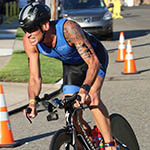
Credit: Courtesy Ginny Cataldi
Make Drinking on the Bike Easy
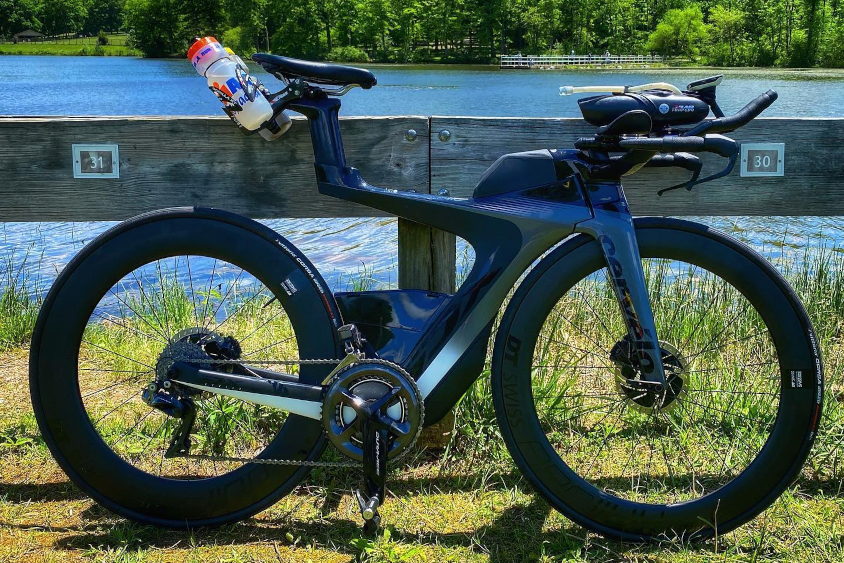
The most effective way to increase the opportunity to drink on the bike is to carry more drinks with you. If your bike only has one bottle cage, add another. If you already have two cages, you can use larger capacity bottles if your frame size allows. Add a between-the-arms setup or a behind-the-saddle option for greater hydration capacity with minimal aero impact.
Keep in mind that clear or dark-colored bottles will heat more easily than lighter-colored, opaque options. And consider insulated bottles to keep your drinks colder for longer if you’re riding in hotter weather.
If you’re racing on a technical course with turns and/or undulation, you’ll want to try to drink when your speed is lowest to minimize coming out of an aerodynamic position when it’s most significant.
If you can grab a bottle when seated on a climb, or when coming out of a turn, you’ll be impacted less by the wind. However, don’t take risks on the bike; if you need to drink when on the flats and straightaways to stay safe, do it! In sprint triathlon races, where you’re likely to be going harder on the bike for a shorter amount of time, be extra cautious about trying to drink while pedaling with urgency, in a crowd.
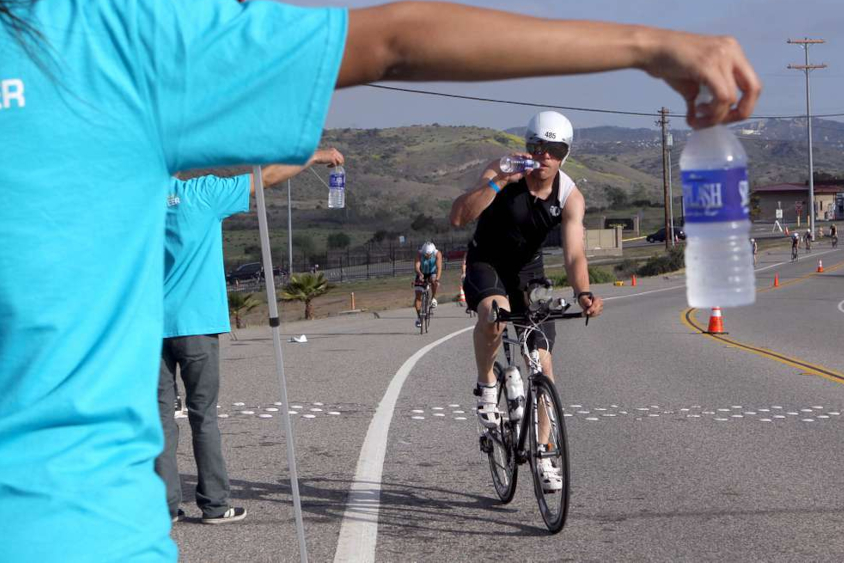
For longer distance events, don’t skip hydration aid stations. It’s better to arrive in T2 with an extra, unused bottle than to get to the run in a semi-depleted state from which you’re not likely to recover.
When stopping at a refueling or aid station, make sure to let those around you—including race volunteers and other racers—know your intent to take on more hydration. Don’t risk unintentionally coming off your bike or endangering others. You can’t get that finisher’s medal if you don’t finish.
Credit: Creative Commons®
Drink to Thirst on Shorter Rides
For many triathletes, drinking to thirst during rides of an hour or less should be enough to stave off dehydration. Also, consider absorption and digestion rates (<750ml/hr) for sprint or Olympic-distance races vs. half- or full-distance races. Drinking in excess never feels great, no matter how long or short your race is.
The general recommendation, based on the body of sports science research, is to consume 550ml per hour. So one bottle should be enough for most riders. Of course, if you know you’re a heavy sweater, you may need to drink more, up to about a bottle each hour. And the same goes when training on hot days.
A word of caution about overconsuming water or non-electrolyte drinks: it could lead to hyponatremia—a downward spiraling electrolyte imbalance that can affect balance, cognitive function, cause stroke, or even death. So be mindful not to overdo it when training.
Drink One Bottle or More per Hour for Long Rides
If you’re riding for more than an hour, one bottle may not be enough. And drinking when only thirsty may be too little, too late. If you’re riding for more than a few hours and cannot carry enough water on your bikes, planning a route with stops to refill bottles is an excellent idea.
You can keep stomach sloshing to a minimum by taking small pulls from your bottle every 10-15 minutes. Accounting for humidity and altitude (drier climates, and those at elevation may require slightly greater consumption) should also be considered.
There’s also a benefit to drinking carbohydrates to keep your energy stores full and prevent bonking, while also taking in electrolytes to help stave off cramping and prevent hyponatremia. Since most carbohydrate sources need water for optimal absorption, this strategy will benefit your carb intake, too.
Credit: Courtesy Katie Rodger
Staying Hydrated on the Run
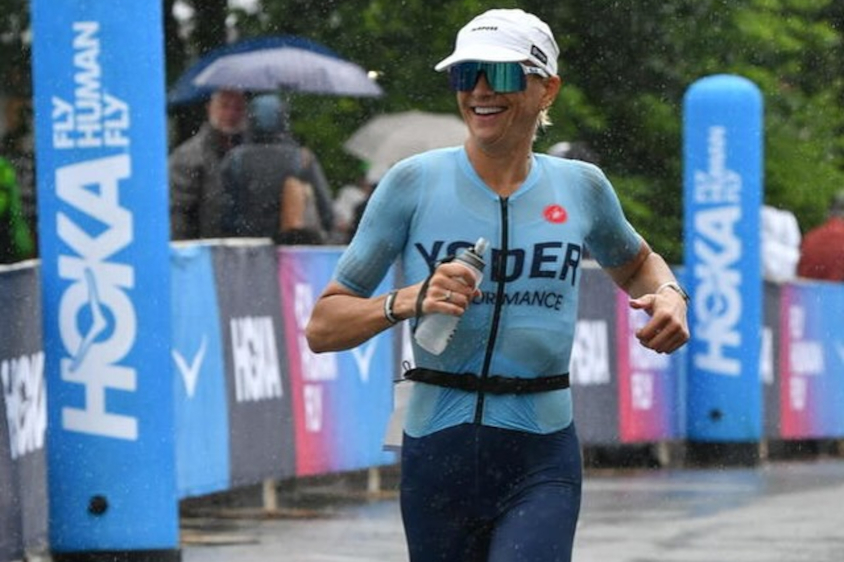
In a training scenario, carry a bottle in a hand-held holster. Many options include a small storage pocket, which is great for keeping an extra electrolyte tab to add to your bottle when topping off with water mid-run.
If you’re doing a BRICK training session, you’ve no clock against you, so you’ve no excuse not to refuel and rehydrate for your run.
When doing longer runs in which you might finish a bottle, plan a loop route and refuel where convenient. Or plan a route with a fountain or other refilling opportunity so you can refill your bottle and use the spare electrolyte tab in the carrying holster.
When you’re racing, you can take a quick pull from your bike water bottle before heading out on the run. If you’re doing a sprint triathlon, dehydration may not be as big a concern compared to when racing longer events. But this does not mean skip drinking altogether.
Once you’re on the run course in a race, use aid stations. You can practice taking a full cup of water or an electrolyte drink from a friend’s hand or from a table, and pinching the top closed so you don’t spill the contents while running towards the race finish.
And if you’re training indoors, the same advice on how frequently and how much to drink applies. It’s even easier to manage storing and reaching for rehydration options on a bike trainer or a treadmill.
Stay Hydrated for Triathlon Checklist
- Two or more bike bottle cages
- Large capacity (≥750ml) bottles on the bike
- Handheld bottle holster for run training
- Electrolyte drink (carbs are good, too!)
- Preload the previous day for big events and/or hot weather training.
Check Out The Latest Electrolyte Mixes From Amazon
By clicking on the product links in this article, we may receive a commission fee at no cost to you, the reader. Sponsorships and affiliate commissions help support our research so we can help you find the best products. Read full affiliate disclosure here.
About the Author
Get ACTIVE on the Go

Couch to 5K®
The best way to get new runners off the couch and across the finish line of their first 5K.
Available for iOS | Android


Discuss This Article