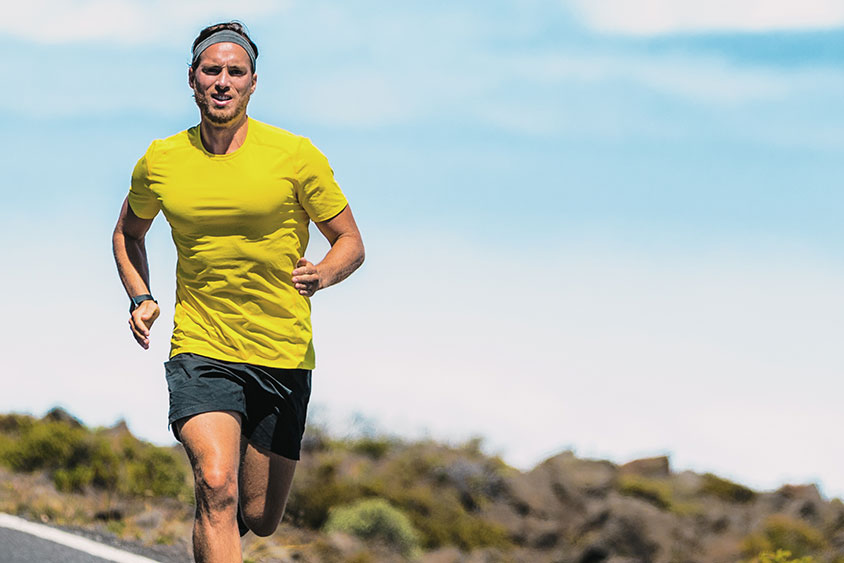
If you've ever watched your pace fall apart on a blistering afternoon run, or felt your heart pounding through a ride that should have felt easy, you already know that heat changes everything. The good news is that you can absolutely still reach your endurance race goals when the weather turns brutal.
These tips on how to beat the summer heat come from people who've lived it, training and racing through punishing heat and learning the hard way just how much a hot day can rearrange your plans.
We won't pretend it's easy. Training and racing in the heat is genuinely hard, and it can feel discouraging when your numbers don't match your effort. But with the right approach, it's completely manageable, and athletes who understand how heat works end up with a real advantage over those who simply suffer through it.
Why Trust Us?
ACTIVE.com's editorial team relies on the knowledge and experience of fitness and wellness experts, including competitive athletes, coaches, physical therapists, nutritionists, and certified trainers. This helps us ensure that the products we feature are of the highest standard. Collectively, the team has spent countless hours researching equipment, gear, and recovery tools to create the most accurate, authentic content for our readers. Customer satisfaction is also a key part of our review process, which is why we only feature highly rated products.
Why Racing and Training in Hot Weather Is So Hard on Triathletes
Heat is one of the biggest performance disruptors in triathlon, and understanding why it's so taxing is the first step to beating it. When it's hot, your body isn't just working to move you forward. It's also working hard to keep itself from overheating, and that second job quietly steals from the first.
What Heat Does to Your Heart Rate and Effort
Here's the mechanism. In the heat, your body redirects blood to the surface of your skin to dissipate heat and keep your core temperature in check. To keep cycling all that blood, your heart has to beat faster. That drives your heart rate up, and your perceived effort climbs right along with it. This is the part that catches people off guard: it doesn't just feel the same at a higher heart rate, it actually feels harder.
Because of that, you'll need to back off across all three disciplines. You'll have to lower your running paces, your bike power numbers, and your swim effort (especially in open water or a non-air-conditioned pool).
The Overtraining Risk of Pairing Heat With Hard Workouts
If you refuse to reduce your effort and try to hold your normal numbers, you open the door to overtraining. You'll be working at a very intense level that's punishing on your nervous system, and you're doing it on top of the stress the heat is already adding.
That leads to the single most important principle in this whole article: you don't want to pair heat with intense effort. Doing hard intervals in the middle of a hot day is doubly taxing on your nervous system and sharply increases your risk of overtraining. Heat is a training stress in its own right, so stacking a hard session on top of it is often too much.
How to Train in Hot Weather Without Burning Out
Smart summer training is mostly about managing effort and timing, not gritting your teeth and bulldozing through. You can keep training productively through the hottest months. You just have to be a little more thoughtful about how and when you do it.
Adjusting Your Pace, Power, and Effort in the Heat
Heart rate is your best friend in the heat because it self-adjusts to conditions. Heat, hills, poor sleep, travel, all of it shows up in your heart rate and automatically dials you into the right low-intensity zone. If you instead lock onto a pace or power target and refuse to let it move, you'll end up working far too hard for the conditions.
So let the numbers drop and train by effort and heart rate instead. There's no shame in any of this:
- Let your pace and power fall without judging yourself for it.
- Follow heart rate over pace, since it accounts for the conditions automatically.
- Use run-walks or even turn a run into a hike when it's truly oppressive.
- Swallow your ego and do what your body actually needs that day.
When to Schedule Your Workout to Stay Cool
Timing is one of your most powerful tools in the summer. Use it deliberately:
- Easy workouts can go anytime. Do them in the cool of the morning so your paces don't have to slow as much, or in the heat of the day at a lower effort to keep your heart rate in check.
- Intense intervals belong in the cool morning or indoors in air conditioning.
- Avoid hard efforts in the midday heat, when the combination is hardest on your body.
The goal behind it is simple: keep your heart rate within a reasonable range so the session does what it's supposed to.

Heat Training: How to Acclimate Before Race Day
If you know your race is going to be hot, the single best thing you can do is deliberately acclimate to heat ahead of time. The rule is blunt but true: you have to train in the heat to perform in the heat. And this isn't just about survival. Heat acclimation is a genuine performance tool that can make race day dramatically more comfortable and faster.
What Heat Training Does for Your Body
Deliberate heat exposure triggers a series of powerful adaptations:
- Increased blood plasma volume gives your cardiovascular system more to work with.
- A stronger left ventricle, so your heart delivers more oxygen, much like the benefit you'd chase with altitude training.
- A higher, earlier sweat rate means you start cooling yourself sooner and delay the perception of fatigue.
- A lower heart rate at the same effort, so exercise simply feels easier when it's hot.
The beauty of heat training is that it's an accessible, affordable, and frankly enjoyable alternative to altitude training. It delivers many of the same benefits with far fewer drawbacks, and it comes with one big bonus that altitude can't match: you can still do your intense sessions, because you're adding the heat stress separately rather than living in thin air around the clock.
How to Use Sauna Heat Training to Prepare for a Race
The most practical way to acclimate is sauna training, and the approach below comes straight from real half-Ironman 70.3 preparation. The ideal is to use the sauna right after your last and hardest workout of the day, when your core temperature is already elevated. Sit in for roughly 20 to 30 minutes.
The key rules:
- Do it post-workout, when your core temperature is already up, and you're primed to adapt.
- Rehydrate fully during and immediately after to ensure your recovery and overall well-being aren't compromised.
- Keep sessions in the 10- to 30-minute range. Longer isn't better here.
One nice perk: most people with a gym membership already have access to the sauna, which makes this nearly free.
A Sample Heat Training Schedule
Plan to build gradually over the roughly three months leading into a hot race:
- Early on: Start with about 10–15 minutes, three times per week, immediately after a workout.
- As race day approaches, build toward about 30 minutes, three to four times per week, still right after training.
- Consistency over those final weeks is what actually adapts, so a steady rhythm beats a few heroic marathon sessions.
How to Stay Cool on Race Day in Hot Conditions
On race day, your goal shifts to keeping your core temperature down by every legal means available, and that starts before the gun even goes off.
Pre-Cooling Before the Start
Pre-cooling means lowering your body temperature before you start, so your core temperature has further to climb before it becomes a problem. This matters more than people realize, because your core temperature can rise even during the swim when the water is warm. A practical, accessible way to pre-cool is to sip an ice slushy or a very cold drink in the lead-up to your start. It's simple, it's cheap, and it buys you a meaningful head start on the heat.
Cooling Strategies During the Race: Ice, Sponges, and Ice Vests
Once you're racing, keep chipping away at your core temperature with whatever the course gives you:
- Ingest ice slushies or cold fluids throughout the race to cool yourself from the inside.
- Hold or stash ice wherever you can. Some athletes use oversized clothing or pockets to carry ice cubes in their palms that slowly melt and cool them over time.
- Douse yourself with cold water and use a sponge at every aid station you pass.
- Use an ice vest before the start or during transitions to lower your temperature ahead of the hardest stretches.
Two things people forget: keep your fluids cold whenever possible, and remember that simply grabbing ice at aid stations is one of the easiest and most effective tactics.
Choosing Cool Gear and Equipment
Your gear choices matter in the heat, and the helmet is the big one. An aero helmet with poor ventilation can turn into a heat trap, causing real heat buildup in your head that will cost you more than its aerodynamics ever save. Test your helmet in hot conditions well before race day and make sure it offers at least some ventilation.
- Choose a well-ventilated helmet over a sealed aero lid in hot races.
- Wear a light-colored, breathable kit that helps rather than traps heat.
- Favor anything that can hold ice or water to keep you cooler longer.
Hydration and Sodium Strategies to Beat the Heat
Hydration and fueling get more complicated in the heat, but the two most common mistakes are simpler than you'd think: over-thinking sodium, and changing too much at the last minute.
Getting Your Fluid Intake Right in Hot Weather
Hydration matters, but it's more straightforward than the internet makes it out to be. Drink to thirst, understanding that in the heat you'll need to drink a fair bit more than usual. And don't overlook the detail almost everyone forgets: keep your fluids cold, which helps cool you and is often far more palatable when you're suffering.
The bigger warning is about timing. Do not dramatically overhaul your fluid or electrolyte ratios in the last days before a race. By race day, your body is adapted to a specific ratio of carbohydrates, electrolytes, and fluids that you trained with all season, so the smart move is simply to drink a bit more of what you already use rather than reinvent your formula at the worst possible moment.
- Drink to thirst, expecting to take in noticeably more than on a cool day.
- Keep your fluids cold for both cooling and palatability.
- Don't change your ratios at the last minute. Stick with what you trained on.
- Drink more, not different. More volume of the same mix beats a brand-new plan.
Do You Really Need Extra Sodium and Salt Tabs?
This one is a little contrarian, so hear it out. If you've properly heat-acclimated, your body has already up-regulated how much sodium it retains, driven by the hormone aldosterone, which means you're naturally storing more salt as part of the adaptation. Because of that, loading up on salt tablets during a race is often unnecessary, and by the time you're swallowing them mid-race, it's largely too late to make much difference anyway.
The point isn't that sodium doesn't matter. Having adequate salt in your normal diet absolutely does. The point is that proper acclimation frees you from over-complicating your electrolyte strategy on race day. This is a genuinely debated topic and plenty of smart people disagree, so test your own approach in training, but don't assume you need to pile on the salt tabs to survive a hot race.
Managing Your Gut and Stomach in the Heat
There's a reason your stomach can feel off in a hot race. Because so much blood is being routed to the surface of your skin for cooling, there's less available in your stomach to digest fluids and food, which raises the likelihood of stomach discomfort. Here's how to handle it:
- Expect it and don't panic. A little stomach distress in the heat is normal, not a sign that everything is falling apart.
- Switch to plain water as soon as things feel off, which dilutes your stomach contents and makes whatever is in there easier to digest.
Conclusion
Racing and training in the heat comes down to a handful of principles working together. Heat raises your heart rate and perceived effort, so you have to adjust your pace, power, and effort rather than forcing your usual numbers. Protect yourself from overtraining by not pairing heat with hard efforts and by timing your workouts wisely.
Prepare for a hot race by deliberately heat-acclimating with sauna training. On race day, you keep your core temperature down with pre-cooling and in-race tools like ice, sponges, and ice vests. And you keep hydration and sodium simple, drinking more of what you already trust rather than overhauling everything at the last minute.
None of this requires being an athletic anomaly or a full-time pro. It just requires understanding what the heat is doing and working with it instead of against it. With the right approach, you can train well and race well even in brutal conditions, and you can absolutely reach your triathlon goals when the temperature climbs. Stay patient, stay cool, and trust the process.
About the Author
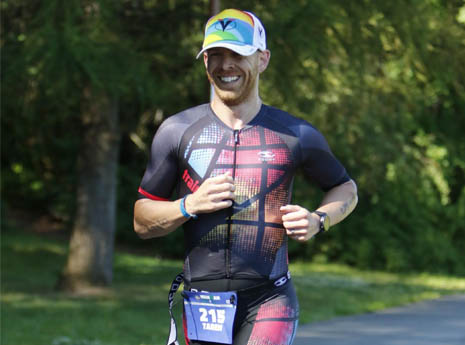
Taren Gesell was a leading global voice in triathlon, publishing the Triathlon Foundations book series and hosting the world’s largest triathlon podcast. He is a former world-ranked triathlete, record-setting marathon swimmer, and founder of the voice-AI training app MOTTIV.
Get ACTIVE on the Go


Couch to 5K®
The best way to get new runners off the couch and across the finish line of their first 5K.
Available for iOS | AndroidLatest In Triathlon


Trending Articles
-

Why Rest Days Are Critical For Runners
-
Why Cross-Training Is Crucial For Triathletes
-
COROS Wants to Turn Your Training Data Into Answers, Not Just Charts
-
Smart Suction Go Compact Bike Rack: Secure, Adaptable, and Ready for Any Adventure
-
How to Recover After a Triathlon: Complete Post-Race Recovery Plan





Discuss This Article