You finished your run hours ago, but you can feel your body still holding onto it. Standing in line for coffee, you shift from one leg to the other because your hips feel tight. Sitting in a midday meeting, your calves quietly protest. You extend one leg out in front of you, searching for a little hamstring relief. The miles may be over, but your muscles still remember them.
Why Trust Us?
ACTIVE.com's editorial team relies on the knowledge and experience of fitness and wellness experts, including competitive athletes, coaches, physical therapists, nutritionists, and certified trainers. This helps us ensure that the products we feature are of the highest standard. Collectively, the team has spent countless hours researching equipment, gear, and recovery tools to create the most accurate, authentic content for our readers. Customer satisfaction is also a key part of our review process, which is why we only feature highly rated products.
Without intentional recovery, those worked-over tissues can stay guarded and tight, increasing your risk of discomfort, compensation, and injury. The right stretches—done consistently and with intention—help restore mobility, improve circulation, and give your muscles the rebound they need for your next run.
Just as important, they help you maintain efficient stride mechanics so you’re not fighting stiffness, losing hip extension, or shortening your stride as fatigue sets in.
These stretches combine controlled holds with gentle movement to restore range of motion, circulation, and overall mobility. Use them post-run or on recovery days. Hold each position for 30-60 seconds, moving slowly and breathing through the stretch. Ten to fifteen minutes is enough to reset and restore.
Phase 1: Restore the Lower Chain
Here, we restore the engine by improving ankle mobility and hip extension—two key drivers of stride length and push-off power.
Downward Dog with Feet Prancing
How to do it: From a standing position, hinge forward and place your hands on the floor. Lift your hips toward the ceiling, pressing firmly through your palms to lengthen your spine and bring your chest closer to your thighs.
In this inverted V position, alternate lifting one heel while pressing the other toward the floor, moving slowly and with control. Perform 15-20 controlled prances.
Why it works: This movement restores mobility through the calves, hamstrings, and Achilles while gently decompressing the spine—supporting ankle range and elastic push-off power.
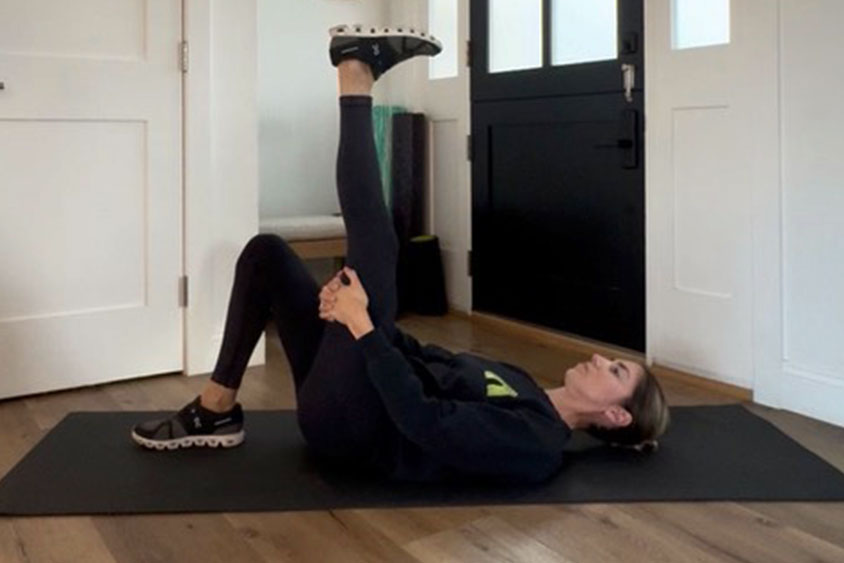
Hamstring Nerve Glide
How to do it: Lie on your back and lift one leg toward the ceiling, holding behind the thigh for support. Slowly alternate between pointing the toes away and flexing the foot toward you, moving in a smooth, controlled rhythm. Perform 15-20 repetitions, then switch sides.
Why it works: Nerve glides, often called flossing, encourage healthy neural mobility by allowing nerves to move more freely through surrounding tissues. Improving this glide can reduce lingering tension in the hamstrings and hips and support a smoother leg swing during your stride.
Phase 2: Reset the Hips
Here, we reduce pelvic tension and lower back compensation. When hip mobility is limited, the body compensates by borrowing movement from the lower back and knees. Resetting the hips helps restore proper joint contribution, so your stride stays powerful and efficient.
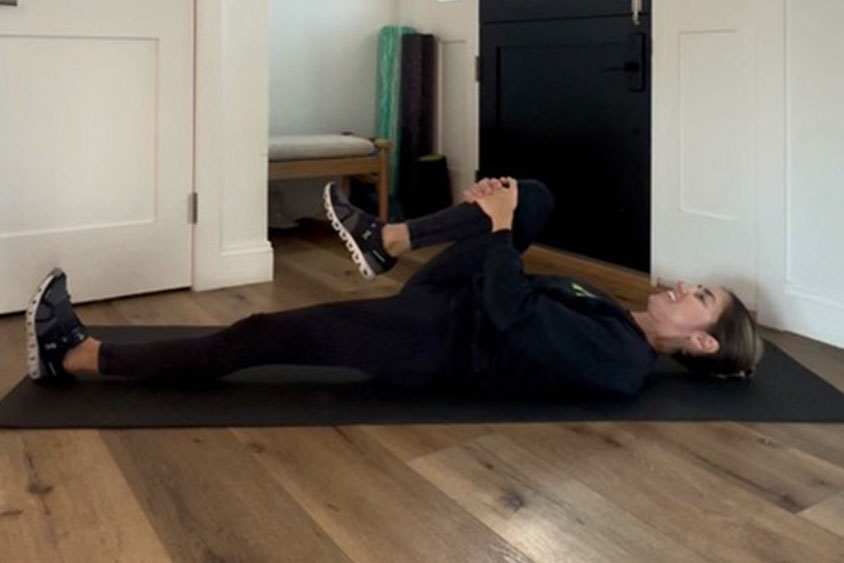
Supine Leg Openers (Knee to chest à groin à side)
How to do it: Lie on your back and draw one knee toward your chest, allowing the opposite leg to rest long on the floor. Hold for 30-60 seconds to release tension through the hip and lower back. Next, guide the same knee outward to stretch the inner thigh and groin. Hold this stretch for 30-60 seconds.
Finally, draw the knee gently across your body. Use the opposite hand to guide the stretch while extending the same side arm out to a straight line from the shoulder. Hold for 30-60 seconds, then switch sides.
Why it works: This sequence restores multidirectional hip mobility and reduces compensatory tension through the glutes and lower back, which can help support smoother stride mechanics.
Happy Baby
How to do it: Lie on your back and bring your knees toward your chest. Take hold of the insides of your feet (or your shins if needed) and gently draw the knees toward your armpits, keeping the ankles stacked over the knees and the lower back grounded. Hold for 30-60 seconds, allowing the hips to soften toward the floor.
Why it works: This position relieves tension in the hips and lower back while opening the groin. Holding the inside of the feet, rather than the outside, reduces shoulder compression and promotes better upper-body alignment.
Phase 3: Decompress and Rebalance
The legs drive running, but posture and arm swing originate from the trunk. Restoring thoracic mobility and chest openness supports breathing efficiency, rotational control, and overall stride rhythm.
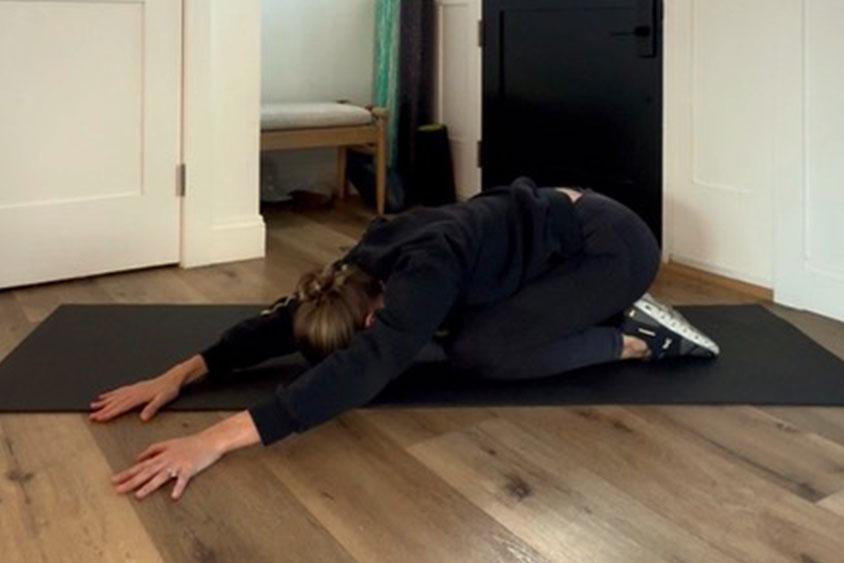
Child’s Pose with Side Reach
How to do it: Start in a quadruped position and sit back into your heels, lowering your chest toward the floor. Hold this center for 30-60 seconds, allowing the spine to lengthen and the back to release. From there, walk both hands to the right to stretch through the left side of the body. Hold for 30 seconds, then switch sides.
Why it works: This variation restores length through the lats and rib cage, improving breathing mechanics and reducing post-run tension through the back and hips.
Standing Wall Lunge with Chest Opener
How to do it: Stand sideways next to a wall and step into a forward lunge, with the leg farthest from the wall in front. Extend the arm closest to the wall behind you, palm against the surface, and arm in line with the shoulder. Hold for 30-60 seconds, then switch sides.
Why it works: The lunge position restores hip extension in the back leg while encouraging the heel to press toward the floor, supporting calf mobility. Opening the chest counteracts the forward-driven nature of running, improving breathing mechanics and upright posture.
Stretching after a run isn’t about chasing flexibility—it’s about preserving performance. Consistently restoring mobility, joint balance, and elastic rebound allows your body to absorb load more efficiently and generate force with less strain. Make these movements part of your routine, and your next run won’t just feel better—it will move better.
About the Author

Kristina Duffy is a Pilates Instructor and movement specialist who helps active individuals return to pain-free movement after injury, pregnancy, or prolonged time away from sport. Working with a wide range of bodies and experience levels, she specializes in core rehabilitation, strength restoration, and sustainable training practices that support long-term performance and pain-free living. Kristina’s approach emphasizes building body awareness, reducing fear around movement, and building confident strength so clients can live and perform at their best.
Get ACTIVE on the Go

Couch to 5K®
The best way to get new runners off the couch and across the finish line of their first 5K.
Available for iOS | Android



Discuss This Article