A proper warmup begins before you step out the door, not when your watch starts. Many runners jump straight into movement, a few quick leg swings or a short jog in place, before settling into their pace. But an effective warmup is more than just increasing heart rate. It wakes up the rotation, activates the deep stabilizers, gradually loads the calves and hips, and prepares the nervous system for impact.
Think of it as a progression: start on the floor to wake up control and coordination, move to standing to build strength and alignment, then transition into rhythmic drills that mirror the mechanics of running. By the time you take your first stride, your body is ready.
Why Trust Us?
ACTIVE.com's editorial team relies on the knowledge and experience of fitness and wellness experts, including competitive athletes, coaches, physical therapists, nutritionists, and certified trainers. This helps us ensure that the products we feature are of the highest standard. Collectively, the team has spent countless hours researching equipment, gear, and recovery tools to create the most accurate, authentic content for our readers. Customer satisfaction is also a key part of our review process, which is why we only feature highly rated products.
Here is how to structure a simple, effective warmup that takes you from the floor to your first stride.
From the Floor
Beginning on the floor creates space to move deliberately before adding speed or impact. This phase establishes control and coordination to build a strong foundation and ensure seamless transitions.
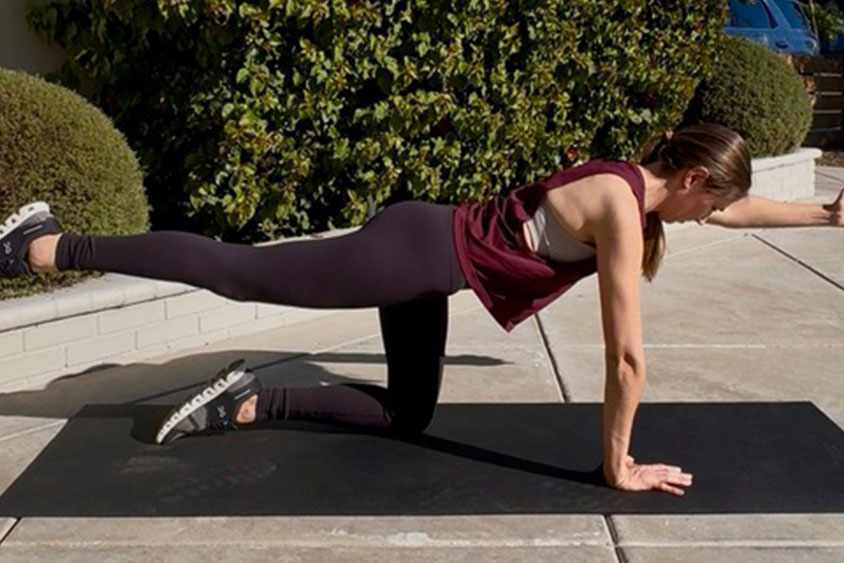
Quadruped Cross-Body Reach (Bird Dog)
From a hands and knees position, extend the opposite arm and leg while maintaining a steady torso. Perform 8 repetitions per side, focusing on length rather than height. This movement reinforces cross-body coordination and trunk stability, which are key components of efficient running mechanics.
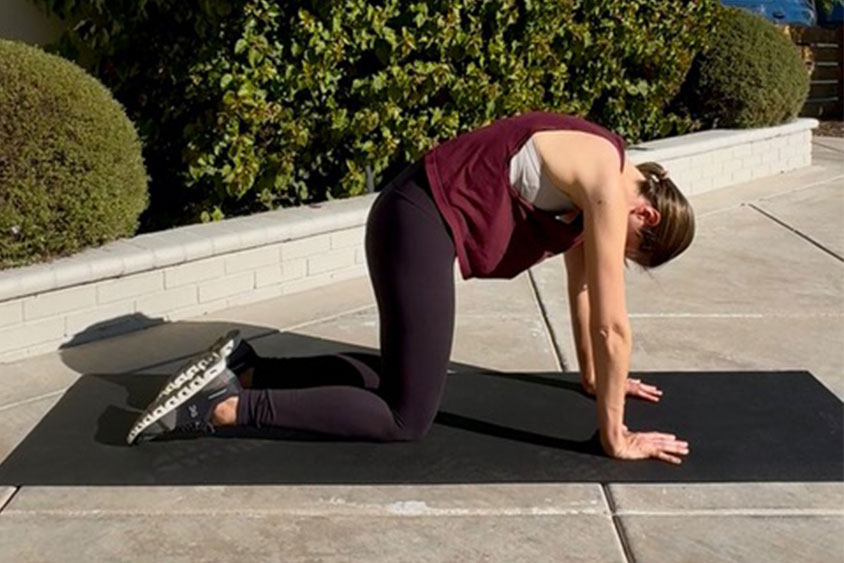
Plank with Cat Stretch Reset
Hold a forearm or high plank for 20 to 30 seconds, maintaining a neutral spine and steady breath, then transition into 4 or 5 controlled cat-cow repetitions before returning to plank. Repeat the sequence once. This pairing activates the anterior (front) chain while working mobility through the spine.
Down Dog to Knee Drive
From the downward dog position, lift one leg toward the ceiling, then draw the knee toward the chest or the same side elbow with control. Perform 5 repetitions per side, maintaining steady alignment through the shoulders and trunk. This movement begins loading the calves and hip flexors while reinforcing core stability before transitioning to an upright position.
From Standing
Transitioning upright introduces load and balance while reinforcing alignment through the hips, knees, and ankles. These movements build single-leg dynamic strength and prepare the lower body for the demands of stride mechanics.
Reverse Lunge
Step one leg back into a lunge, lowering with control before returning to standing. Perform 6 to 8 repetitions per side, maintaining an upright torso and stable front knee. This pattern activates the glutes and reinforces single leg strength without excessive forward knee strain.
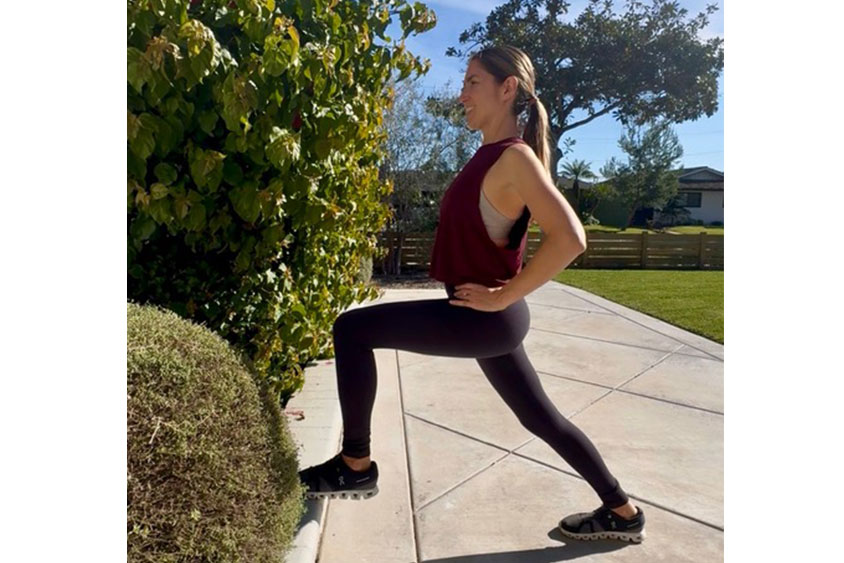
Elevated Split-Stance Rock
Place the front foot on a low step, curb, or sturdy surface while keeping the back leg extended behind. Shift forward and back through the front knee in a controlled range, completing 6-8 repetitions per side. Maintain active engagement through the back leg rather than sinking passively into the front hip. This move prepares the ankle, hip flexors, and glutes for stride length and elastic mechanics while reinforcing alignment under load.
Into Movement
With control and strength in place, introduce rhythm and light impact. These movements mirror the cadence and coordination of running while gradually increasing intensity.
Light Run in Place
Run lightly in place for 20 to 30 seconds, staying tall through the torso and landing softly through the forefoot. This introduces gentle Achilles and calf loading while gently elevating heart rate.
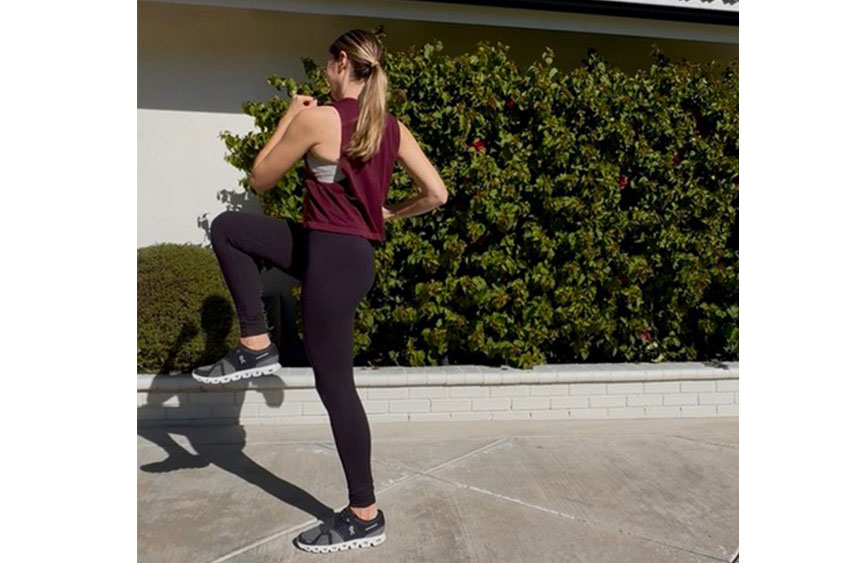
High Knees or March Progression
Drive the knees upward in a controlled rhythm for 20 to 30 seconds, coordinating arm swing with each lift. Focus on posture and smooth cadence rather than speed. This reinforces hip flexion and the arm and leg coordination required for efficient running.
Side Shuffles
Move laterally for 20 to 30 seconds with soft knees and light, controlled foot placement. This activates the lateral hip stabilizers that support knee alignment during forward motion.
Consistency matters more than complexity. Choose movements that feel controlled and repeatable, and allow intensity to rise gradually as the run begins. The hardest part is often stepping out the door; once movement starts, rhythm tends to follow.
About the Author

Kristina Duffy is a Pilates Instructor and movement specialist who helps active individuals return to pain-free movement after injury, pregnancy, or prolonged time away from sport. Working with a wide range of bodies and experience levels, she specializes in core rehabilitation, strength restoration, and sustainable training practices that support long-term performance and pain-free living. Kristina’s approach emphasizes building body awareness, reducing fear around movement, and building confident strength so clients can live and perform at their best.
Get ACTIVE on the Go


Couch to 5K®
The best way to get new runners off the couch and across the finish line of their first 5K.
Available for iOS | Android




Discuss This Article