Quick answer: The best dry-land routine for swimmers combines mobility work for the hips, shoulders, and thoracic spine with core stability exercises and strength moves targeting the lats, shoulders, triceps, and chest. Mixing and matching from exercises like book openings, dead bugs, and pull-ups builds the stability and power that translate directly into more efficient movement in the water.
Why Trust Us?
ACTIVE.com's editorial team relies on the knowledge and experience of fitness and wellness experts, including competitive athletes, coaches, physical therapists, nutritionists, and certified trainers. This helps us ensure that the products we feature are of the highest standard. Collectively, the team has spent countless hours researching equipment, gear, and recovery tools to create the most accurate, authentic content for our readers. Customer satisfaction is also a key part of our review process, which is why we only feature highly rated products.
Swimming is a top-notch full-body, low-impact workout that builds cardiovascular endurance, strength, and stamina. And what you do outside the pool can enhance that work by developing the mobility, stability, and power that support efficient movement in the water.
What Should Swimmers Focus on During Dry-Land Training?
A good dry-land routine should address the body as a whole. For swimmers, that means combining mobility work for the hips, shoulders, and thoracic spine with core exercises that teach the trunk to remain stable as the arms and legs move. Strength work can target major swimming muscles like the lats, shoulders, triceps, and chest.
The following exercises cover each of these areas and can be mixed and matched depending on your training schedule, available equipment, and experience level.
Quick Tip
1. Diaphragmatic Breathing
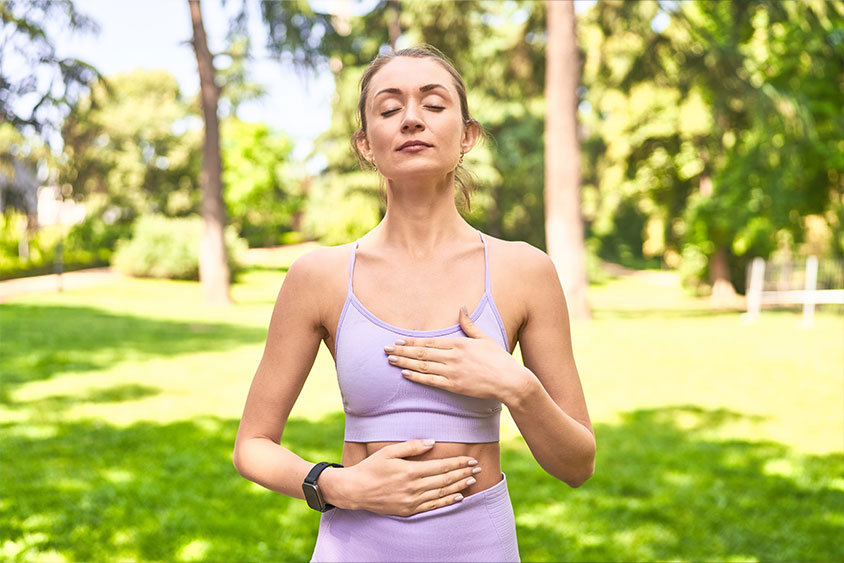
Breathing may not look like an exercise, but for swimmers especially, it's an important piece of fitness. Diaphragmatic breathing helps swimmers improve breath control while encouraging rib cage mobility and better coordination between breathing and core engagement.
Lie on your back with your knees bent and place your hands around the sides of your lower ribs. Inhale through your nose, feeling your ribs expand into your hands, then slowly exhale and allow the ribs to soften back in. Try to keep the neck and shoulders relaxed throughout.
Beginner's Tip: Keep your exhales soft instead of forceful, like you are fogging up a mirror. Start with five to eight slow breaths.
2. Book Openings
Book openings improve mobility through the thoracic spine while opening the chest and shoulders. This exercise is especially great for maintaining healthy shoulder mechanics and reducing stress on the joint, a common site for swimming-related injuries.
Lie on your side with your knees bent and arms extended in front of you. Keeping your knees stacked, sweep your top arm up and across your body as your chest rotates toward the opposite side. Follow your hand with your eyes and head, then slowly return to the starting position.
Beginner's Tip: Don't force your shoulder toward the floor. Let the movement come from your upper back and gradually increase your range.
3. Downward Dog
Downward dog combines shoulder mobility with length through the spine, lats, hamstrings, and calves. It is an active stretch that can help with better posture and body position in the water.
Begin on your hands and knees, tuck your toes, and lift your hips up and back. Press through your hands as you lengthen your spine and reach your hips away from your shoulders. Your knees can remain slightly bent, especially if your hamstrings feel tight.
Beginner's Tip: Prioritize a long spine and comfortable shoulder position rather than trying to get your heels to the floor.
4. 90/90 Hip Rotations
Strong swimming starts with more than the shoulders. Maintaining mobility through the hips can support kicking mechanics, body position, and movement both in and out of the pool.
Sit with your knees bent and feet wider than hip-width apart. Slowly lower both knees toward one side, return through center, and rotate them to the other side. Keep the movement controlled and work within a comfortable range.
Beginner's Tip: Place your hands behind you for support if sitting upright makes it difficult to move smoothly through your hips.
5. Lunge With Reach
The lunge with reach combines hip mobility with upper-body movement. For swimmers, it can help restore length through the hip flexors while improving the overhead mobility needed for a long, streamlined position in the water.
Step one foot forward into a lunge and lower the back knee toward the floor. Gently shift your hips forward until you feel a stretch through the front of the back hip. From there, reach the arm on the same side as the back leg overhead, creating length from the hip through the side of the body.
Beginner's Tip: If balance is an issue, you can do the stretch with the back knee on the floor for more support.
6. Dead Bug
The dead bug teaches you to stabilize your trunk while moving your arms and legs independently, making it a great core exercise for swimmers.
Lie on your back with your arms reaching toward the ceiling and your hips and knees bent to approximately 90 degrees. Slowly extend one arm overhead while reaching the opposite leg away from you. Return to center and alternate sides while keeping your trunk controlled.
Beginner's Tip: Keep your leg at a higher angle when reaching if your back begins to arch or your ribs flare away from the floor.
7. Bear Crawl
Bear crawls challenge the core, shoulders, hips, and coordination at the same time, similar to the coordination required with swimming.
Begin on your hands and knees, with your hands under your shoulders and knees under your hips. Tuck your toes and hover your knees just above the floor. Move the opposite hand and foot forward together, alternating sides while keeping your hips relatively level and your core engaged.
Beginner's Tip: Master the bear hover first. Hold the starting position for 10 to 20 seconds before adding forward movement.
8. Diamond Push-Up
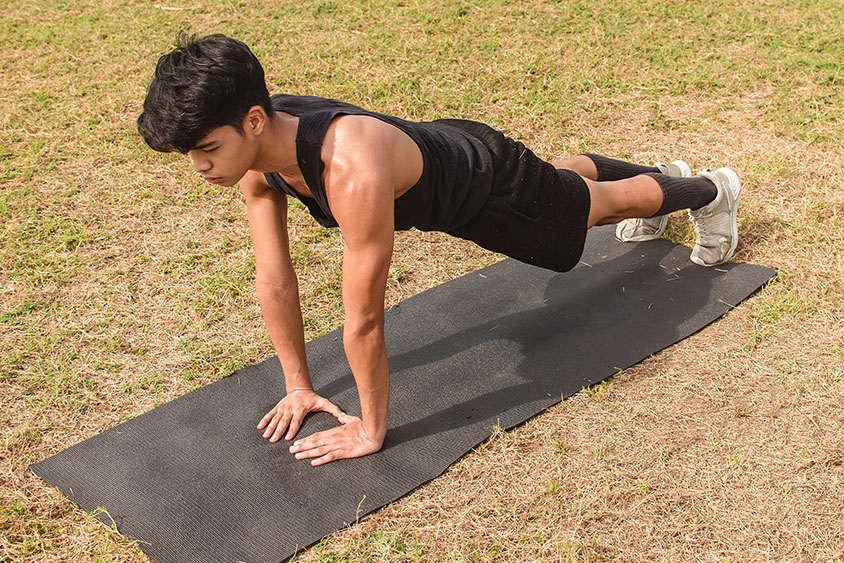
Diamond push-ups build strength through the chest, shoulders, and triceps, with an added emphasis on triceps. Strength built here can help generate force during the propulsive phase of a stroke.
Begin in a plank with your hands close together underneath your chest, bringing your thumbs and index fingers toward one another. Bend your elbows to lower your body toward your hands, then press the floor away to return to your starting position.
Beginner's Tip: This variation is challenging. Perform it with your knees on the floor, or elevate your hands on a bench, until you can maintain good form.
9. Pull-Up
Pull-ups strengthen the lats, upper back, shoulders, and arms, all important contributors to a strong swimming stroke.
Hang from a pull-up bar with your hands slightly wider than shoulder-width apart. Initiate the movement by drawing your shoulder blades down, then bend your elbows and pull your chest toward the bar. Lower yourself back down with control.
Beginner's Tip: If you are not ready for a full pull-up, use an assisted pull-up machine or resistance band rather than sacrificing form.
10. Dumbbell Pullover
The dumbbell pullover targets the lats while also challenging shoulder control and core stability in an overhead position.
Lie on a bench holding one dumbbell with both hands above your chest. Keeping a slight bend in your elbows, slowly lower the weight overhead as far as you can comfortably control. Engage your lats to bring the dumbbell back over your chest.
Beginner's Tip: Start light. Avoid letting your ribs flare or your lower back arch as the weight travels overhead.
A little intentional work on land can go a long way toward supporting stronger movement in the pool
Power Bonus: Squat Jump
Swimming may be upper-body intensive, but lower-body power matters, especially when launching off the blocks and pushing away from the wall during turns.
Stand with your feet approximately hip-to-shoulder-width apart. Lower into a squat, then drive your feet to jump explosively upward. Land softly with your knees bent and move directly into the next repetition when you are ready.
Beginner's Tip: Build a strong bodyweight squat before adding the jump. You can also perform individual jumps with a pause and reset between each repetition.
Putting It All Together
Dry-land training allows swimmers to build the strength, mobility, stability, and power that complement their time in the water. You don't need to perform every exercise at once. Choose a combination that supports your individual needs and swimming routine, focus on quality movement, and progress gradually. A little intentional work on land can go a long way toward supporting stronger movement in the pool.
Frequently Asked Questions
How often should swimmers do dry-land training?
There's no single rule, but two to three sessions per week, mixing mobility, core, and strength exercises, is a reasonable starting point for most swimmers. Adjust based on your pool training volume and how your body responds.
Do I need equipment for dry-land swim training?
Not necessarily. Many of these exercises, like diaphragmatic breathing, book openings, downward dog, dead bugs, and bear crawls, use only bodyweight. A pull-up bar, dumbbell, and bench open up a few additional strength options but aren't required to get started.
What muscles should swimmers prioritize in dry-land training?
The lats, shoulders, triceps, chest, and core are the main areas that translate directly to swimming performance, alongside mobility in the hips, shoulders, and thoracic spine that supports efficient body position in the water.
Can dry-land exercises help prevent swimming injuries?
Yes, particularly for the shoulders. Mobility exercises like book openings help maintain healthy shoulder mechanics, while balanced strength work across the chest, back, and core reduces the repetitive strain that contributes to common swimming injuries.
Is dry-land training necessary, or is swimming alone enough?
Swimming alone builds excellent cardiovascular fitness, but dry-land work develops mobility, stability, and power that are difficult to build in the water alone. The combination supports more efficient technique and helps reduce injury risk over time.
About the Author

Kristina Duffy is a Pilates Instructor and movement specialist who helps active individuals return to pain-free movement after injury, pregnancy, or prolonged time away from sport. Working with a wide range of bodies and experience levels, she specializes in core rehabilitation, strength restoration, and sustainable training practices that support long-term performance and pain-free living. Kristina’s approach emphasizes building body awareness, reducing fear around movement, and building confident strength so clients can live and perform at their best.
Get ACTIVE on the Go


Couch to 5K®
The best way to get new runners off the couch and across the finish line of their first 5K.
Available for iOS | Android


Discuss This Article