Quick answer: Better balance comes from practicing controlled movements that challenge stability, coordination, and lower-body strength. Heel-to-toe walking, weight shifts, single-leg reaches, calf raises, step-ups, and single-leg Romanian deadlifts can all help. Start near a sturdy support, choose a manageable variation, and progress gradually as your confidence and control improve.
Why Trust Us?
ACTIVE.com's editorial team relies on the knowledge and experience of fitness and wellness experts, including competitive athletes, coaches, physical therapists, nutritionists, and certified trainers. This helps us ensure that the products we feature are of the highest standard. Collectively, the team has spent countless hours researching equipment, gear, and recovery tools to create the most accurate, authentic content for our readers. Customer satisfaction is also a key part of our review process, which is why we only feature highly rated products.
Think about the last time you fell. Maybe you missed a step on the stairs, tripped over a pet, or stumbled over rough terrain while training. We all have moments when we lose our balance. It is a natural part of being upright and moving.
Yet we tend to take balance for granted until it starts to slip. Every day, it quietly shapes how confidently you move. And while we often link losing balance with getting older, balance is a skill worth building at every stage of life.
The good news? Like strength and flexibility, balance can be trained, and you do not need fancy equipment or an elaborate workout routine to get started.
In this article, we will look at what balance really is, why it matters at every age, and how you can start building it.
What Is Balance, Really?
Balance is much more than the ability to stand on one foot without wobbling. It is a coordinated effort between your brain, nervous system, and muscles to keep your body stable, whether you are standing still or moving.
Your vision, inner ear, also called the vestibular system, and sense of body position, known as proprioception, work together to help you maintain stability. These systems allow your body to make constant adjustments as you move.
The more opportunities you give your body to practice these adjustments in a safe, controlled environment, the better prepared it can become for the unpredictable movements of everyday life and training. ACTIVE's balance exercise guide offers additional options for progressing stability work.
Why Does Balance Matter at Every Age?
Good balance does not just help you avoid falling. It contributes to how efficiently, confidently, and comfortably you move.
For athletes, balance supports coordination, agility, and control when changing direction. For busy adults, it plays a role in everything from carrying groceries upstairs to gardening or getting down on the floor. As we age, maintaining balance becomes increasingly important for preserving independence and reducing fall risk.
The National Institute on Aging notes that maintaining good balance can help older adults get around, stay independent, and carry out daily activities. The CDC's physical activity guidance for older adults also includes balance activities as part of a weekly routine.
But there is no reason to wait until balance becomes a challenge to start working on it. Building better balance is an investment in how you move today and how you want to keep moving in the years ahead.
Quick Tip
6 Exercises to Build Better Balance
Some of the most effective ways to challenge your stability involve movements you already perform throughout the day. Start with exercises that feel manageable and gradually increase the difficulty as your strength and coordination improve.
Aim to practice balance exercises about three times per week. Keep a sturdy chair or countertop nearby for support, especially if you are new to balance training. Check with your healthcare provider before starting if you have a history of falls, dizziness, or a condition that affects your balance.
1. Heel-to-Toe Walk
Walking in a straight line with one foot directly in front of the other narrows your base of support, challenging your body to make small adjustments to stay upright.
How to do it:
- Stand tall with your arms relaxed at your sides or extended slightly for balance.
- Step one foot directly in front of the other, placing the heel of your front foot just ahead of the toes of your back foot.
- Continue walking forward for 8 to 10 slow, controlled steps.
- Turn around and repeat.
Tip: Practice next to a wall or countertop for support. Focus on staying upright rather than looking down at your feet.
2. Standing Weight Shifts
Before you can confidently balance on one leg, you need to be comfortable transferring your weight from one foot to the other. This simple exercise builds awareness of how your body moves over its base of support.
How to do it:
- Stand with your feet hip-width apart and knees relaxed.
- Slowly shift your weight onto your right foot without leaning your upper body excessively.
- Allow your left heel to lift slightly as your weight transfers.
- Return to center and repeat on the opposite side.
- Continue alternating for 10 to 12 repetitions.
Tip: Progress to briefly lifting the unweighted foot completely off the floor.
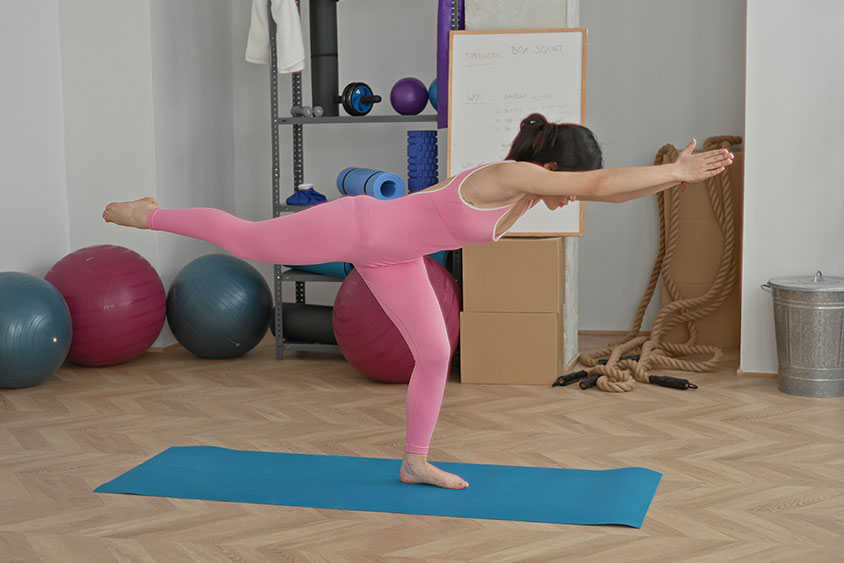
3. Single-Leg Balance With Reaches
Standing on one leg challenges your stability, but adding movement with your arms or opposite leg requires your body to adapt to a changing center of gravity.
How to do it:
- Stand tall and shift your weight onto one foot.
- Lift your opposite foot slightly off the floor.
- While maintaining your balance, reach one arm forward, out to the side, and overhead.
- Return your arm to your side and repeat 3 to 5 times before switching legs.
Tip: Keep the toes of your lifted foot lightly touching the floor if needed for additional support.
Runners can add more sport-specific stability work with ACTIVE's balance exercises for runners.
The goal isn't to eliminate every wobble but to become more confident and capable of controlling it.
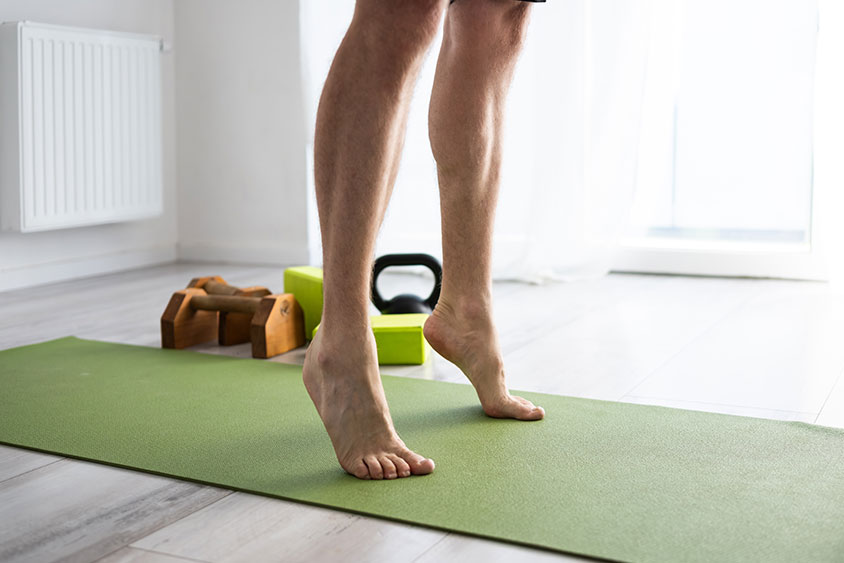
4. Standing Calf Raises
Your feet and ankles play an important role in maintaining balance. Strengthening the muscles that control ankle movement helps build a more stable foundation.
How to do it:
- Stand with your feet hip-width apart near a sturdy surface.
- Press evenly through the balls of your feet as you slowly lift both heels.
- Pause briefly at the top without rolling your ankles outward.
- Lower your heels with control.
- Repeat for 10 to 15 repetitions.
Tip: Try alternating single-leg calf raises while holding on lightly for support.
5. Step-Ups With a Knee Drive
Balance becomes more challenging when your body is moving. Step-ups combine lower-body strength with single-leg stability, making them especially useful for everyday activities such as climbing stairs.
How to do it:
- Stand in front of a low, stable step.
- Place your right foot on the step and press through it to lift your body upward.
- As you straighten your right leg, lift your left knee toward hip height.
- Pause briefly before lowering your left foot back to the floor.
- Complete 8 to 10 repetitions before switching sides.
Tip: Place your hands on your hips as you step up, focusing on keeping your pelvis level and steady throughout the movement.
6. Single-Leg Romanian Deadlift
This exercise challenges your balance while strengthening the muscles along the back of your body, including your glutes and hamstrings. It also teaches you to maintain control as your center of gravity shifts.
How to do it:
- Stand tall and shift your weight onto your right leg, keeping a slight bend in your knee.
- Hinge forward from your hips as your left leg extends behind you.
- Keep your hips relatively level and your spine long as your torso moves forward.
- Press through your standing foot to return upright.
- Complete 6 to 8 repetitions before switching sides.
Tip: Keep your back toes on the floor in a kickstand position until you feel comfortable lifting the leg.
Quick Tip
How Can You Challenge Your Balance as You Improve?
Once the basics feel easier, you can keep improving your balance by introducing new challenges. Changing your base of support, adding movement, or shifting your visual focus can encourage your body to develop greater control.
Try holding a single-leg position a little longer, reaching in different directions, or incorporating balance work into your regular strength-training routine. Avoid increasing multiple challenges at once. Giving your body one new variable at a time makes it easier to maintain control and judge your progress.
Remember This
A little wobbling isn't necessarily a bad thing. Those micro-adjustments are your body learning to respond to changes in position.
The goal isn't to eliminate every wobble but to become more confident and capable of controlling it. Sometimes, improving your balance starts with simply learning to embrace a little wobble.
Frequently Asked Questions
Can balance improve at any age?
Yes. Balance is a trainable skill that relies on coordination between the nervous system, muscles, vision, inner ear, and sense of body position. Choose exercises suited to your current ability and progress gradually.
How often should I do balance exercises?
A practical starting point is about three sessions per week. Balance exercises can also be incorporated into regular strength or movement routines when they can be performed safely and with control.
What is the easiest balance exercise for beginners?
Standing weight shifts are an accessible starting point because both feet can remain in contact with the floor. Practice near a sturdy surface and progress to briefly lifting the unweighted foot.
Should I use a chair during balance exercises?
Yes. A sturdy chair, wall, railing, or countertop can provide support while you learn a movement or when fatigue affects your stability. Use only as much assistance as needed.
When should I talk to a healthcare provider about balance problems?
Talk with a healthcare provider if you have frequent falls, dizziness, vertigo, sudden balance changes, or a medical condition or medication that may affect stability. Seek guidance before beginning a new routine if you are unsure what exercises are appropriate.
About the Author

Kristina Duffy is a Pilates Instructor and movement specialist who helps active individuals return to pain-free movement after injury, pregnancy, or prolonged time away from sport. Working with a wide range of bodies and experience levels, she specializes in core rehabilitation, strength restoration, and sustainable training practices that support long-term performance and pain-free living. Kristina’s approach emphasizes building body awareness, reducing fear around movement, and building confident strength so clients can live and perform at their best.
Get ACTIVE on the Go


Couch to 5K®
The best way to get new runners off the couch and across the finish line of their first 5K.
Available for iOS | Android


Discuss This Article