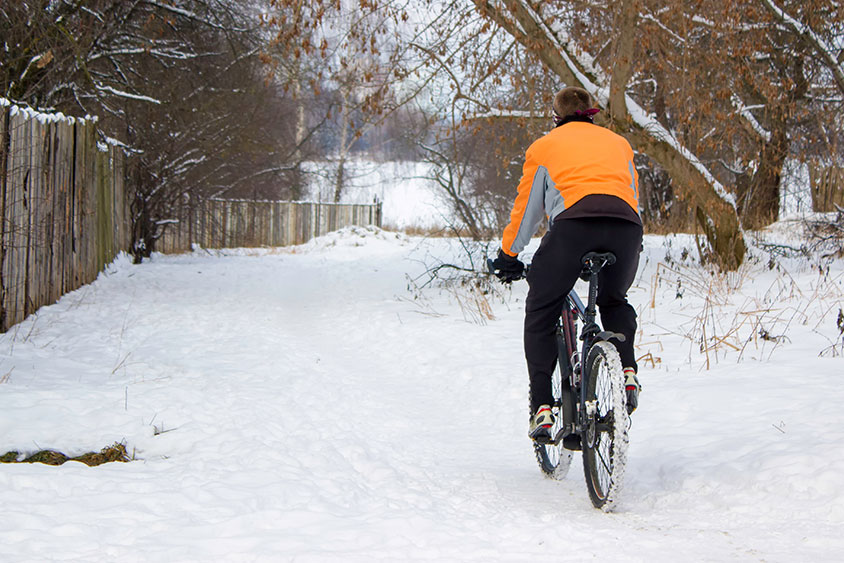
It seems counterintuitive that the season when we make our resolutions to be more active falls in winter. Any outdoor fitness goals or activities are automatically more challenging to complete. Rain, snow, and ice can make roads and trails difficult to navigate. And bundling up to manage the cooler temps, even if there’s no precipitation, can make it tough to be active at all.
With some planning, starting new routines in winter is possible. That includes cycling. You just need to take some additional precautions you wouldn’t when the weather is warmer.
Why Trust Us?
ACTIVE.com's editorial team relies on the knowledge and experience of fitness and wellness experts, including competitive athletes, coaches, physical therapists, nutritionists, and certified trainers. This helps us ensure that the products we feature are of the highest standard. Collectively, the team has spent countless hours researching equipment, gear, and recovery tools to create the most accurate, authentic content for our readers. Customer satisfaction is also a key part of our review process, which is why we only feature highly rated products.
Before You Hit The Road
Learn And Love Your Layers
In winter, keeping your body dry is key to staying warm. Moisture combined with wind is what can turn even a chilly day downright brutal. That’s why it’s critical to understand how to layer what you wear.
- Your base layer should pull the moisture away from your body. Use moisture-wicking materials on the bottom next to your skin. Look for merino wool, bamboo, or tencel (Often marketed as Lyocell). These are all effective at moving moisture away from the body and keeping the skin dry, which is critical for staying warm when winter winds start to blow in the middle of a long ride.
- Your middle layer should be insulating, such as fleece. It can capture your body heat and keep you warm.
- And the outer layer, often called the shell, should be a material that can combat the wind and precipitation.
P.S.: Don’t forget your gloves. Peddling will keep your core warm, but it won't do anything for your fingers and hands.
Light It Up
Winter days are shorter and often overcast. The lower light can make visibility difficult, both for you and the cars you’re sharing the road with. Install high-lumen lights on the front and back of your bike so you can see better, and the other vehicles can see you as well. Make sure that the brightest of these lights is installed on the back. Your priority is to let others know you’re on the road, too.
Lower Your Tire Pressure
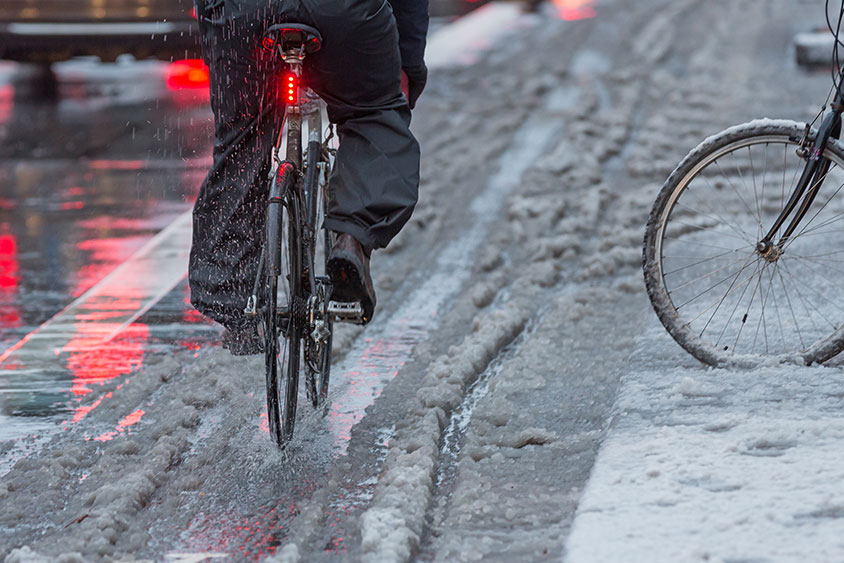
Before you hit the road, lower your tire pressure to improve your grip on what are often wet, slick, or slushy roads. Dropping the tire pressure by 10 to 15 PSI (but staying within the recommended pressures on the tire’s sidewall) increases your tires’ footprints and improves your traction in the slush and snow.
Once You're Moving
Avoid The Gutter
When you’re new to cycling, it can feel safer and more comfortable to stay close to the curb, but it’s never a good idea. Riding too close to the curb, even in warmer and drier months, can make you less visible to vehicular traffic. But in the winter months, the troubles at the curb compound. Not only are you less visible, but you’re also now trying to ride where ice and slush can accumulate.
Lean The Bike. Don’t Lean Your Body
Slippery roads, especially through turns, can make operating any kind of vehicle tough, but there are ways to combat these conditions on the back of a bike.
When navigating a turn with less-than-ideal traction, push the bike into the turn while keeping your body upright. This keeps your center of gravity over the tires and reduces the risk of the wheels slipping out from under you.
Brake Early, And Use The Rear Brake
Just like when you’re behind the wheel of a car, you’ll need more time to stop when roads are wet or icy. Brake early, and give yourself plenty of time to come to a stop. And lean more on the rear brake when conditions are bad. This will help you avoid fishtailing. It also keeps you from falling if you lock up your front brakes on a patch of ice.
Be Ready To Bail On Your Ride
Winter weather can change quickly. Roads that were wet one minute can turn to ice the next. Temperatures can drop. Precipitation can kill visibility. Make sure you have a plan in place if conditions become too dangerous. Maybe that’s public transit where you live. Perhaps it’s having someone expecting an emergency call to come pick you and your bike up. However you manage it, be prepared to bail if needed.
There’s something special about a winter ride. The air is crisp. The temps are cool. And by the end, your head is clear. Finish a ride in the winter, and you can feel like you accomplished something. These tips aren’t just about avoiding risk, although they can help you do that. They are designed to help you brave the elements and enjoy a new outdoor activity in a season when most people are content to stay indoors and bundled up. So, layer up, check your tires, and head out.
About the Author

Jarrett Rush is a Dallas-based writer who stays active by playing and practicing sports with his kids.
Get ACTIVE on the Go


Couch to 5K®
The best way to get new runners off the couch and across the finish line of their first 5K.
Available for iOS | AndroidLatest In Cycling


Trending Articles
-

How to Stay Hydrated While Cycling
-
COROS Wants to Turn Your Training Data Into Answers, Not Just Charts
-
The Best Beginner Bikes of 2026: What to Buy (and What to Skip) for Every Kind of Rider
-
Nekteck Leg Massager Review: Worth It for Recovery?
-
How to Recover After a Triathlon: Complete Post-Race Recovery Plan





Discuss This Article