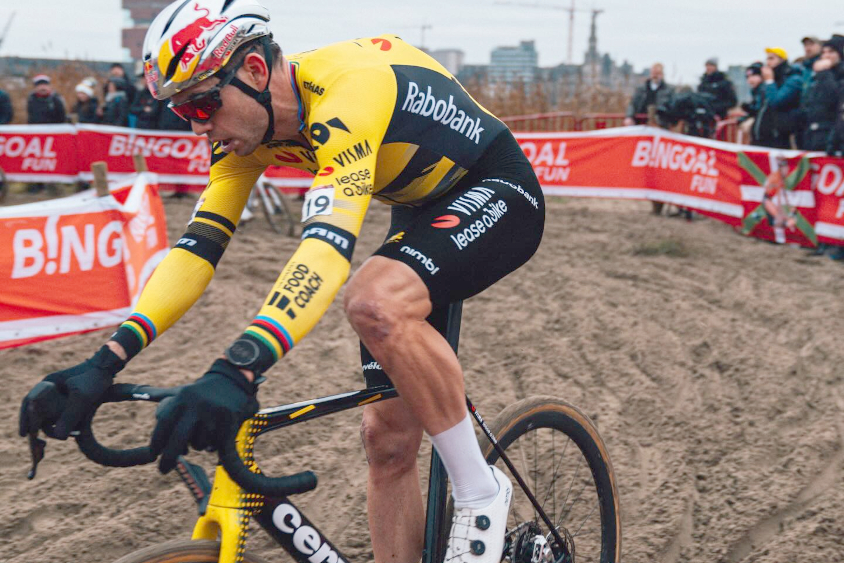
Pro cyclists build specific strength on the bike. Credit: Courtesy Visma-Lease-a-Bike
Quick answer: Cycling alone can improve muscular endurance and body composition, but it won't build significant muscle mass on its own. Riding primarily trains slow-twitch fibers in your quads, glutes, and hamstrings; building real muscle size requires pairing cycling with two to three gym sessions per week using heavier resistance training.
Why Trust Us?
ACTIVE.com's editorial team relies on the knowledge and experience of fitness and wellness experts, including competitive athletes, coaches, physical therapists, nutritionists, and certified trainers. This helps us ensure that the products we feature are of the highest standard. Collectively, the team has spent countless hours researching equipment, gear, and recovery tools to create the most accurate, authentic content for our readers. Customer satisfaction is also a key part of our review process, which is why we only feature highly rated products.
If you're looking to improve your aerobic capacity, increase strength, and build muscle, but don't want to be confined to the gym all of the time, cycling is an excellent addition to your routine.
If you already ride, you can do specific workouts to increase strength and cycling-specific power.
Riding a bike can increase your cardiovascular fitness, but you can also reap strength rewards with time in the saddle. While you may not increase muscle mass from time on the bike as you would with gym sessions, you will reap the benefits of improved body composition.
Time on two wheels can target your quads, hamstrings, hip flexors, glutes, and calves while keeping you lean. When cycling, you primarily use your quads (vastus intermedius, vastus lateralis, and vastus medialis) and gluteus maximus. Your position on the bike, set during a bike fit session, determines how much of your glutes are used when pedaling. Your hamstrings do work on the pedal upstroke. With a smooth, circular pedaling motion (think of scraping something off the sole of your shoe), you can deliver consistent power throughout the entire pedal stroke.
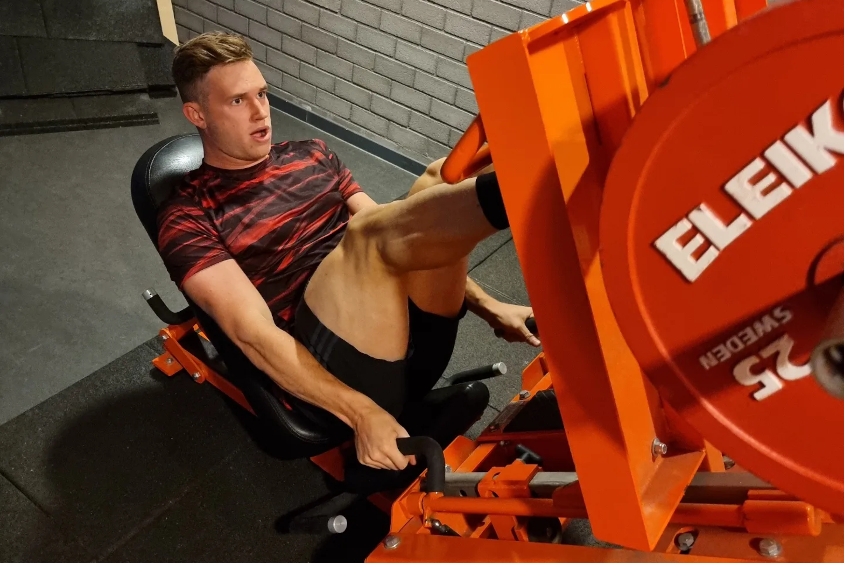
Track cycling specialist Harry Levereysen spends time in the gym to build muscle. Credit: Creative Commons
What Builds the Different Types of Muscle?
There are three types of muscle fibers: Type 1A (slow twitch), Type 2A (fast twitch), and Type 2B (also fast twitch). Type 1A muscle fibers are recruited for endurance efforts; they do not produce as much force as the other two types. Type 2 fibers can generate more force than Type 1, but fatigue more quickly.
When cycling, you primarily use slow-twitch fibers. Slow twitch muscle is strengthened through extended use at lower intensities, think long, steady, seated efforts. You both recruit and strengthen them while you use them. This builds muscular endurance, but does not necessarily build more muscle mass.
When you get out of the saddle for a climb or a town line sprint, you briefly switch to using Type 2 fibers until they tire, and you plop back onto your saddle. Repeated, high-intensity efforts strengthen fast-twitch muscles by fatiguing them, letting them rest, and then using them again.
As you improve your strength and fitness, it takes increasingly more training stress to induce positive adaptations ("progressive overload"). The stronger and more fit you get from training, the more targeted work you'll need to do to make additional gains in fitness and power. This is why, when training, you may start with 10 to 12 sprints at first, then work your way to 16 to 20 short intervals, while also increasing resistance to build power.
Quick Tip
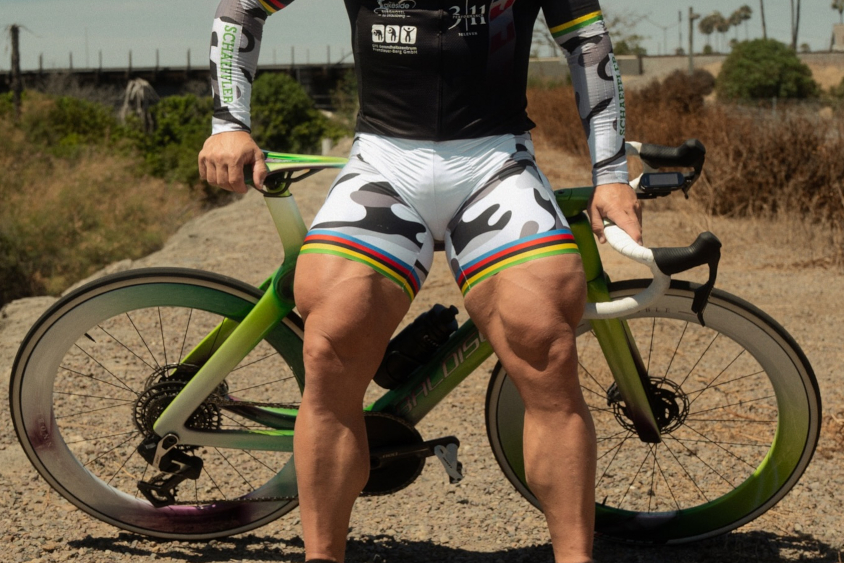
To get quads like these, you'll need to spend more time on the bike and at the gym. Credit: Creative Commons
What Cycling Workouts Help Build Muscle?
Building muscle on the bike, whether riding indoors or outdoors, is achieved by riding with intent and targeting different muscle fibers through specific workouts.
A cycling training program that builds your fitness base, trains your aerobic threshold, and improves maximal effort will also improve your strength. The ability to contract muscle repeatedly is trained through time on the bike, increasing muscular endurance, and the cardiovascular fitness to support this. Without the fitness, you won't be able to sustain the work needed to build muscle.
Cycling alone won't build muscle mass. To get bigger, you'll need to hit the gym two to three times per week to augment your riding if you want to make strength gains. Traditional strength training, performed with heavy weights in a gym, can provide greater resistance than a bike, so you can load muscles more, resulting in relatively greater muscle growth.
For well-trained athletes, "sweet spot" work (right below your aerobic threshold) may be one of the most efficient ways to build fitness that supports muscular strength gains. For athletes wanting to improve top-end power, Tabata intervals might be a good option after developing an aerobic base to support high-intensity interval training.
Research indicates that performing a HIIT workout immediately following a gym session may not inhibit muscular hypertrophy. In the most simple terms: Cardio work will not strip your gym gains. Consult a cycling coach or check out a training plan for more structured training advice to help you build muscle while cycling.
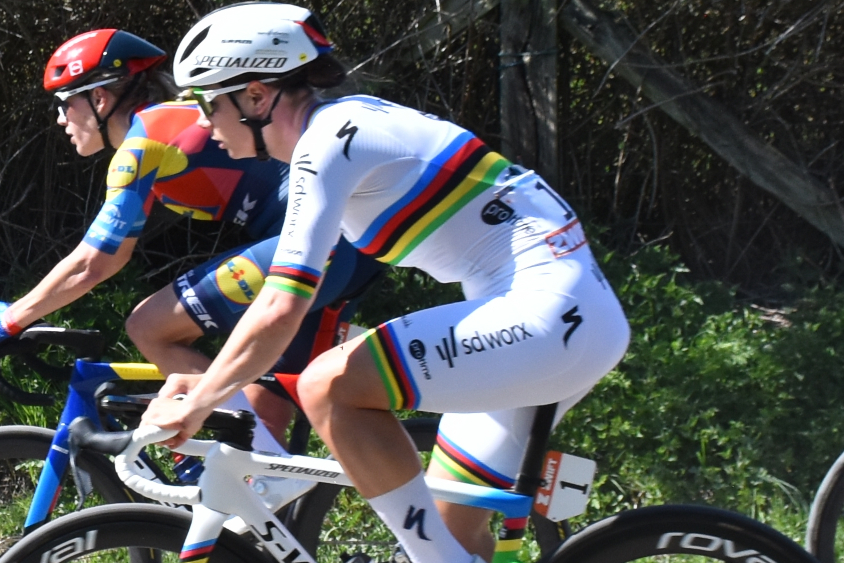
More time on the bike will help build lean muscle. Credit: Creative Commons
How Long Does It Take to Build Muscle?
There is no single, specific answer as this depends on your age, sex, athletic history, current fitness level, nutrition status, hydration, and more. Other factors influencing the time it takes to build muscle on the bike also include how well you recover between rides; the faster you recover, the sooner you can perform your next workout.
According to a review paper published in Acta Physiologica Hungarica, it is plausible that cycle training requires a longer period to significantly increase muscle size compared to typical resistance training due to a much slower hypertrophy rate.
It is plausible that cycle training requires a longer period to significantly increase muscle size compared to typical resistance training due to a much slower hypertrophy rate
"The probability for improving in muscle quality appears to be higher in older adults compared to young adults," the authors indicate in the same review. "For younger adults, higher-intensity intermittent cycling may be required to achieve strength gains."
Does It Matter If You Ride Indoors or Outdoors to Build Muscle?
A study of 20 well-trained male cyclists examined power output over a randomized 20-minute maximal test outdoors and indoors. Researchers concluded no meaningful difference between the power generated outdoors vs indoors. However, researchers found greater variability in power output for the outdoor test vs. the indoor test.
What are the practical implications for you? Not much, really.
Cycling indoors allows for more steady power and cardiovascular efforts. Riding outdoors introduces greater variability, elevation change, wind, heat and humidity, influencing efforts; however, you can still make progress in developing and increasing your strength and fitness.
What Are the Pros and Cons of Cycling for Muscle Building?
Cycling for Muscle Building Pros:
- Similar benefits when riding indoors or outdoors
- Allows for a structured program with repeatable/comparable results
- Non-weight bearing (great for injury rehab)
- Cardiovascular benefits
Cycling for Muscle Building Cons:
- Predominantly lower body
- Not optimal for gaining muscle mass
- Bike and required gear can be expensive
Frequently Asked Questions
Can cycling alone build significant muscle mass?
Not on its own. Cycling primarily trains slow-twitch muscle fibers, which builds muscular endurance and improves body composition, but it doesn't provide the heavy resistance needed for significant muscle growth. Pairing cycling with two to three gym sessions per week is necessary to build noticeable muscle mass.
Which muscles does cycling work the most?
Cycling primarily targets the quads (vastus intermedius, vastus lateralis, and vastus medialis) and gluteus maximus, with the hamstrings contributing during the pedal upstroke. Hip flexors and calves are engaged as well, making it largely a lower-body activity.
Does riding indoors or outdoors make a difference for building muscle?
Research comparing indoor and outdoor power output found no meaningful difference in the power well-trained cyclists could generate in either setting, though outdoor riding showed greater variability due to terrain and weather. Both can support muscle-building goals equally well.
Will lifting weights after a cycling workout hurt my gains?
Research suggests that performing a HIIT workout immediately following a gym session does not appear to inhibit muscular hypertrophy. In simple terms, cardio work will not strip away the muscle gains from your strength training.
How long does it take to build muscle through cycling?
There's no single answer, since it depends on age, sex, athletic history, current fitness level, nutrition, and recovery quality. Research suggests cycle training generally requires a longer period to meaningfully increase muscle size compared to traditional resistance training, due to a slower hypertrophy rate.
About the Author

Get ACTIVE on the Go


Couch to 5K®
The best way to get new runners off the couch and across the finish line of their first 5K.
Available for iOS | Android




Discuss This Article