Buying your first bike should be straightforward. Unfortunately, it’s not for most people. Walk into a shop (or open a browser tab) and you're immediately confronted with a half-dozen categories, component acronyms, and price points that range from "reasonable" to "used car." Most beginners end up buying the wrong kind of bike entirely, or spending far more than they need to on features that won't matter for years.
Why Trust Us?
ACTIVE.com's editorial team relies on the knowledge and experience of fitness and wellness experts, including competitive athletes, coaches, physical therapists, nutritionists, and certified trainers. This helps us ensure that the products we feature are of the highest standard. Collectively, the team has spent countless hours researching equipment, gear, and recovery tools to create the most accurate, authentic content for our readers. Customer satisfaction is also a key part of our review process, which is why we only feature highly rated products.
Here's what actually matters when you're starting: fit, comfort, durability, and versatility. A good beginner bike is one you'll actually ride — one that works for where you live, what you want to do, and what your body needs on hour two of a longer ride than you've ever done. This guide breaks down three of the most popular categories for new riders and recommends two strong options in each. These are bikes that are well-built, widely available, and priced for people who haven't yet decided whether this is a lifelong obsession.
The Most Common Mistake First-Time Buyers Make
If you get one thing right, make sure you are buying in the correct category. Most people, at least at first, end up buying based on aesthetics rather than intended use.
A road bike is not the right choice if most of your riding will be on mixed surfaces, bike paths, or anything less than smooth pavement. A hybrid is not the right choice if you've already decided you want to do centuries or group rides with drop bars. A gravel bike is not the right choice if you never plan to leave pavement and just want to get fit.
The other common mistake: overspending early. A $2,000 bike does not make a beginner faster or more comfortable than an $800 bike. It makes them anxious about where they park it. Buy enough bike to grow into, not the bike you might want in three years.
Hybrid Bikes: The Best Starting Point for Most Riders
If you're not sure which category you belong in, start here. Hybrid bikes have flat handlebars, an upright riding position, and enough versatility to handle bike paths, light trails, commutes, and casual fitness rides. They're the easiest bikes to ride confidently from day one.
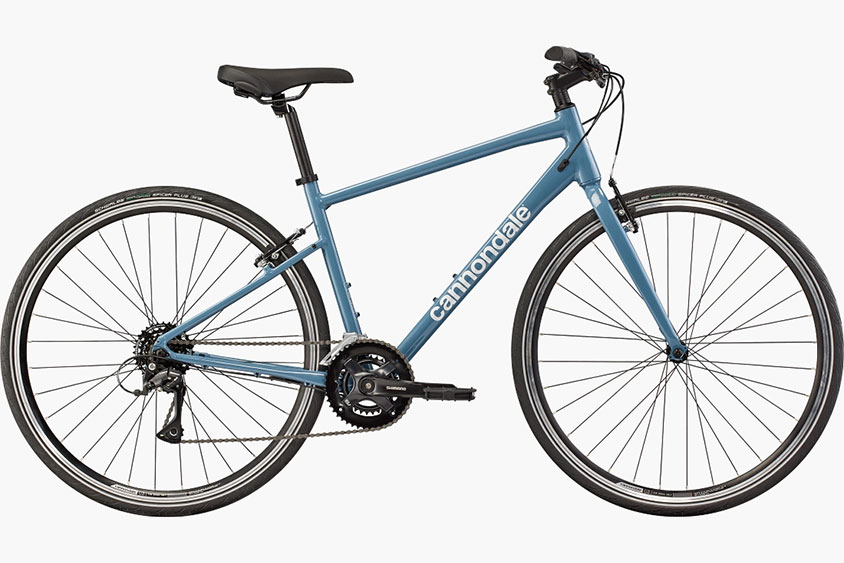
Cannondale Quick 4 — Around $600
Cannondale has been building performance bikes for decades, and its DNA shows up even at the entry level. The Quick 4 uses its SmartForm C3 alloy frame, which is lightweight and stiff where it needs to be, with clean internal cable routing that keeps the bike looking tidy and performing smoothly. A Shimano 2x7 drivetrain handles a wide enough gear range for city riding and neighborhood climbs, and the Schwalbe Spicer Plus tires roll fast and comfortably. Rack and fender mounts mean you can customize it as your needs evolve. It's a no-fuss, well-made hybrid from a brand that knows bikes.
Co-op Cycles CTY 1.1 — Around $650
REI's house brand doesn't get enough credit. The CTY 1.1 is a legitimate beginner hybrid — lightweight aluminum frame, Shimano drivetrain, disc brakes, 700c x 40mm flat-resistant tires with reflective sidewalls, and rack-and-fender mounts. And the best part is, this bike comes at a price that leaves room in the budget for a helmet and lock. What sets it apart from other bikes at this price is what comes with it: REI includes free adjustments for a full year after purchase, which matters when you're new and still dialing in fit and comfort. If you live near an REI and want a reliable first bike with real post-purchase support, this is one of the most practical options on the list.
Road Bikes: For Riders Who Know They Want Pavement
Road bikes have drop handlebars, narrower tires, and a more forward-leaning position. They're faster on pavement and more efficient over long distances. On the downside, they require more comfort adaptation than hybrids, and they're less forgiving on rough surfaces. If you're signing up for organized rides, want to join a cycling club, or have already committed to training seriously, this is your category. Both picks here use endurance geometry and offer a more upright, comfortable position than race bikes — making them genuinely appropriate for new riders rather than just technically entry-level.
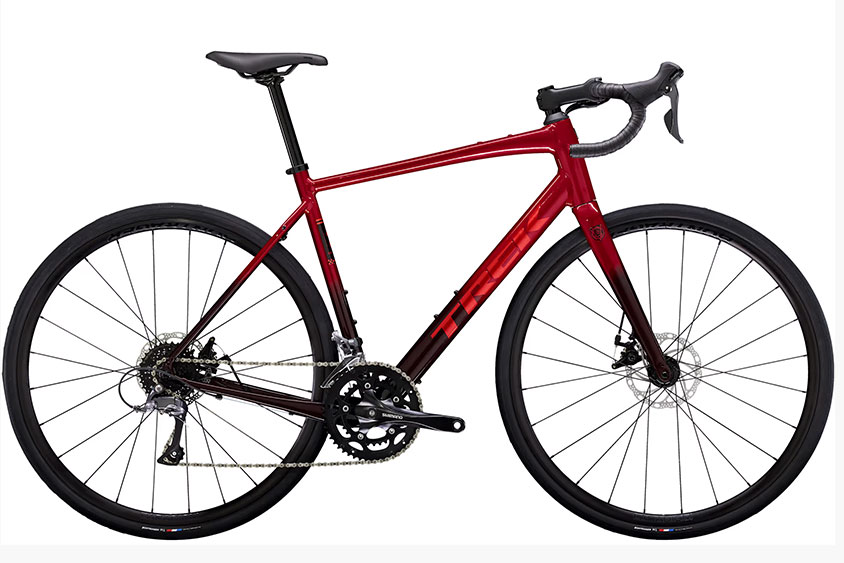
Trek Domane AL 2 — Around $1,200
The Domane AL 2 has been one of the most consistently recommended entry-level road bikes for several years running, and it earned that reputation. It uses an endurance geometry, so you can expect a taller, more relaxed riding position than race bikes, and a carbon fork that takes the edge off road vibration. It comes with disc brakes, clearance for tires up to 40mm, and rack-and-fender mounts, which make it more versatile than most road bikes at this price. The 8-speed Shimano Claris drivetrain is entry-level but smooth, reliable, and easy to maintain. Another plus to buying from a big brand like Trek is that their nationwide dealer network means you'll have no trouble finding support when you need it. This is a bike you can start on and keep riding for years.
Giant Contend AR 2 — Around $1,300
The Contend AR sits at an interesting crossroads for beginners: it's a road bike engineered to handle more than smooth pavement. Giant's D-Fuse seatpost absorbs road vibration before it reaches your back, the tubeless-ready wheels can run tires up to 38mm, and thru-axle disc brakes provide confident stopping in any conditions. The endurance geometry keeps you in a comfortable, upright position, which is exactly what a new road rider needs, and the build quality is what you'd expect from the world's largest bike manufacturer. If you live somewhere with variable road quality or want a road bike that can handle a gravel path without drama, the Contend AR 2 offers more real-world versatility than almost anything else at this price.
Gravel Bikes: For Riders Who Want to Go Everywhere
Gravel bikes are the most versatile drop-bar bikes you can buy. They have wider tires, more relaxed geometry, and clearance to handle everything from smooth pavement to packed dirt roads. If you want one bike that can do a group road ride on Saturday and a rail trail on Sunday, this is your category. They cost a bit more than entry-level road bikes, but the capability gap is real.
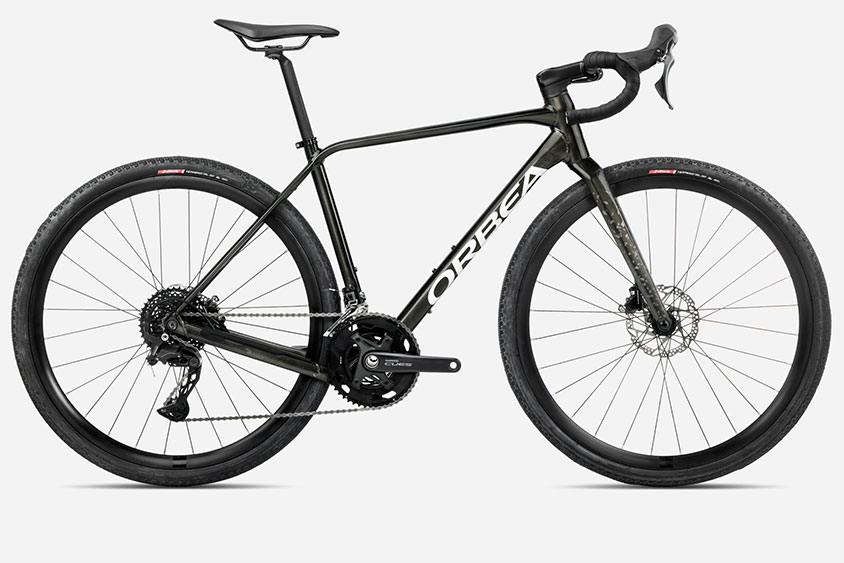
Orbea Terra H40 — Around $2,000
Orbea doesn't get mentioned in beginner conversations as often as Trek or Specialized, which is a shame. They build excellent bikes and offer something most brands don't at this price: meaningful customization before you buy. Through their MyO program, you can adjust stem length, handlebar width, and crank length at the point of purchase, which matters more than most beginners realize until they're three months in and wishing their fit were slightly different. The Terra H40 itself is a well-built aluminum gravel bike with a carbon fork, Shimano CUES drivetrain, thru-axle disc brakes, and tire clearance up to 45mm on 700c or 50mm on 650b wheels. Multiple mounting points and built-in frame storage make it adventure-ready from day one.
Specialized Diverge 3 — Around $1,500
The Diverge E5 has been one of the most talked-about entry-level gravel bikes on the market for years, and the 2026 model is the best version yet. Specialized updated it with Shimano CUES hydraulic disc brakes and drivetrain, a meaningful upgrade at this price point. The E5 aluminum frame is paired with a full carbon fork for vibration damping, and tire clearance goes to 47mm on 700c wheels, giving you serious off-road capability. The geometry is modern and progressive without being aggressive. It’s also stable and confidence-inspiring on loose terrain while still feeling responsive on pavement. Multiple rack and mount points make it bikepacking-ready whenever you're ready to go there.
Before You Buy
Size matters more than brand or components. A bike that doesn't fit properly will be uncomfortable at best and can cause injury over time, so get a basic fitting when you purchase. My advice would be not to skip the local shop to save money online; the test ride and the relationship with a mechanic who knows your bike are worth more than the price difference. And budget $150 to $200 beyond the bike itself for a helmet, lock, lights, and a floor pump, at a minimum.
Remember, the best beginner bike is the one you actually ride. A $600 hybrid that gets out of the garage three times a week beats a $1,500 road bike that intimidates you into leaving it there. Figure out where you're riding, pick the right category, and get out there. The upgrades will still be there after your first thousand miles.
About the Author

Marc Lindsay is a longtime endurance athlete with more than 25 years of experience running and cycling. He has completed marathons, ridden century rides, and competed in collegiate cross country. He previously served as a cycling and triathlon editor at ACTIVE.com, and his writing has appeared on MyFitnessPal and Polar.com, among other digital and print publications. He holds a master’s degree in writing from Portland State University and resides in Chicago, Illinois.
Get ACTIVE on the Go


Couch to 5K®
The best way to get new runners off the couch and across the finish line of their first 5K.
Available for iOS | Android



Discuss This Article