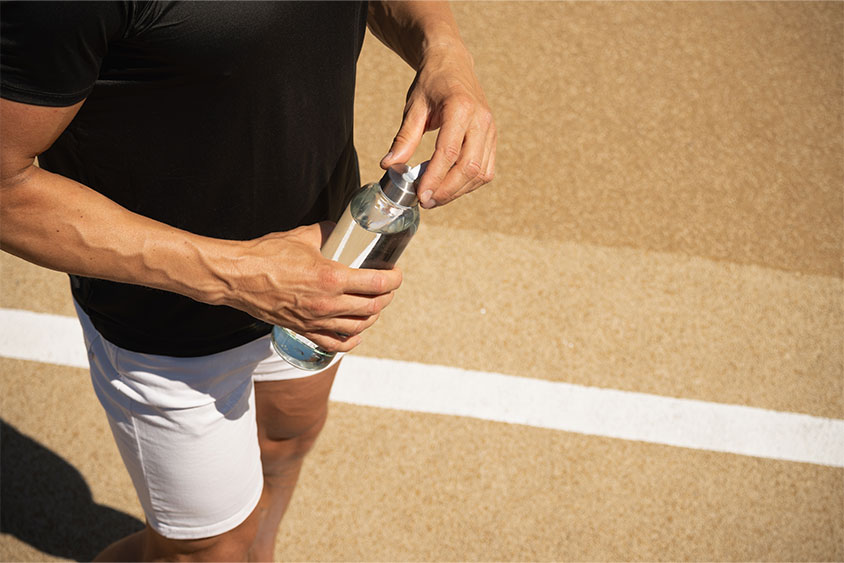
Figuring out how to stay hydrated during the long run sounds simple until you're 10 miles in with your legs cramping and your pace falling apart despite drinking at every mile marker. We've coached thousands of age-group runners through marathon training, and hydration is one of the most common areas where athletes go wrong, often without realizing it until they're already in trouble.
The good news is that once you understand how hydration works during long runs, it stops being a guessing game. You need a simple, repeatable approach that you practice in training until it's automatic. Get this right, and you'll feel stronger through your long runs and cross the finish line feeling in control.
Why Trust Us?
ACTIVE.com's editorial team relies on the knowledge and experience of fitness and wellness experts, including competitive athletes, coaches, physical therapists, nutritionists, and certified trainers. This helps us ensure that the products we feature are of the highest standard. Collectively, the team has spent countless hours researching equipment, gear, and recovery tools to create the most accurate, authentic content for our readers. Customer satisfaction is also a key part of our review process, which is why we only feature highly rated products.
Why Hydration Matters More Than You Think During Marathon Training
Most runners underestimate how quickly fluid loss affects performance. Even mild dehydration, a 2% drop in body weight from fluid loss, is enough to slow your pace, spike your perceived effort, and make your legs far more likely to cramp. For a 160-pound runner, that's just over three pounds.
Poor hydration during training runs also slows recovery between sessions, which compounds over big training weeks. Hydration is a skill, and like every other skill in running, you need to practice it in training rather than figure it out on race day.
How Much Should Runners Drink on Long Runs?
A solid starting point is about 26 ounces (roughly one large water bottle) of fluid per hour. That number shifts with heat, humidity, and how much you sweat, but it gives you a baseline.
The approach I recommend: for every hour of training, fill up one 26-ounce bottle. Take a large sip every five minutes and aim to finish it by the end of each hour. If your stomach is sloshing or you're burping, ease off. If you're thirsty or fading, drink a little more. Repeat this over weeks of training runs, and you'll develop a natural feel for your fluid needs without any calculations.
How to Tell If You're Hydrating Enough
The most reliable checks happen before and after your run, not during it:
- Urine color: Pale yellow before a run means you're ready. Dark yellow means drink water before heading out.
- Body weight: Losing more than 2% of body weight on a run means your fluid intake needs to come up. You can weigh yourself before and after runs to get an idea of how much weight you're losing during your run.
- Thirst mid-run: Feeling thirsty during a run means you're already slightly behind
- Recovery: Feeling wiped out for the rest of the day is often a hydration issue, not just a mileage issue
The Difference Between Water and Electrolytes for Runners
Water and electrolytes solve different problems. Water replaces fluid volume. Electrolytes replace the minerals you lose in sweat, primarily sodium, but also potassium, magnesium, and calcium. Drinking plain water without replacing electrolytes can actually create a different problem than dehydration: the more water you take in, the more you dilute the sodium in your blood, which is what causes the cramping, nausea, and fatigue that runners often misread as needing more water.
For any run over an hour, use a light electrolyte drink rather than plain water. Products like LMNT, Skratch, Precision Fuel, SiS, or Tailwind provide a good electrolyte-to-carbohydrate ratio, with just enough carbohydrates to help your body absorb both the fluid and the minerals. Keep the calories low in your bottle so your fluid intake and calorie intake stay independent of each other.
Signs You're Low on Electrolytes (Not Just Dehydrated)
Dehydration and electrolyte depletion can feel similar, but drinking more water when you're actually low on sodium makes things worse. Watch for these signs that electrolytes are the issue:
- Muscle cramping, particularly in the calves, hamstrings, or feet
- Nausea or stomach unease that water doesn't resolve
- A headache that persists even after drinking
- Sudden mental fog or irritability mid-run
- Swelling in the hands or fingers
Your Hydration Options: Water, Powders, Tablets, Chews, and More
The best hydration product is whichever one you've tested in training, know you can digest, and can reliably access on race day. Here's how each type works.
Electrolyte Powders and Drinks
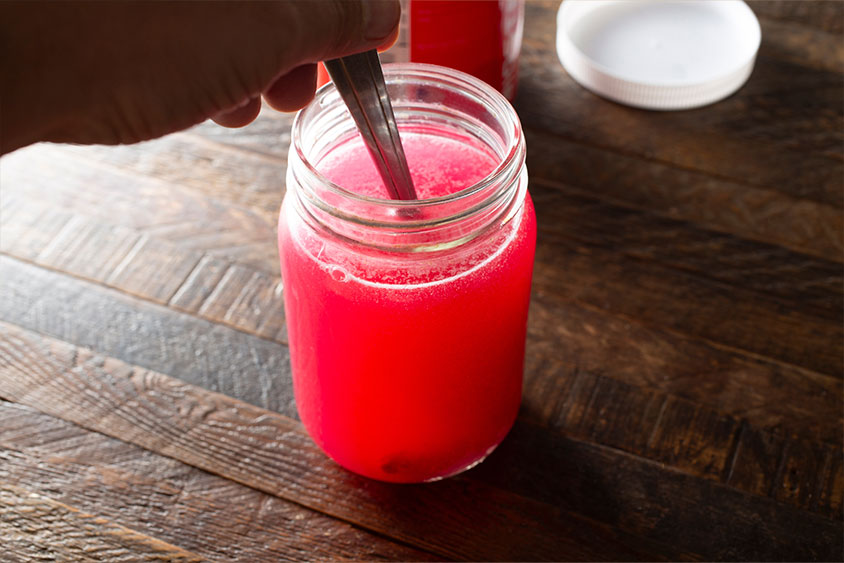
Electrolyte powders mixed into water deliver sodium, potassium, and other minerals in a consistent dose. Look for 200-400mg of sodium per serving, since that's the mineral you lose most in sweat. Products like LMNT, Skratch, Sis, Tailwind, and Precision Hydration are well-formulated with a light carbohydrate base that aids absorption. Powders work well for runners who carry water in a handheld bottle or hydration vest.
Electrolyte Tablets
Electrolyte tablets like Nuun or Precision Hydration dissolve in water and deliver electrolytes with little to no calories. They're lightweight, easy to carry in a pocket, and practical in races where you're grabbing water from aid stations rather than carrying your own fluid. Check the sodium content on the label since it varies significantly between products.
Electrolyte Chews
Chews combine some carbohydrate with electrolytes, making them a dual-purpose option when you need both calories and minerals. They take a few runs to get used to, since chewing while maintaining your breathing pattern is a skill in itself.
Plain Water: When It's Enough and When It's Not
Plain water is fine for runs under 45 to 60 minutes. Beyond that, especially in heat, plain water alone falls short. You're losing sodium at a rate water can't address. If the only option at an aid station is water, use it, but make sure electrolytes are coming from somewhere else, whether that's a tablet, chews, or pretzels from the aid station spread.
How to Avoid Dehydration on Long Runs
Dehydration catches runners off guard more often than it should, especially on cooler days when thirst cues are dulled. You can finish a two-hour run having drunk almost nothing, feel fine in the moment, and spend the rest of the afternoon wrecked.
Here are five hydration tips to stay ahead of it:
- Start hydrated. Check your urine color before heading out. Pale yellow means go. Dark means drink water first
- Drink on a schedule, not just when thirsty. By the time you feel thirsty, you're already behind
- Carry your own fluids. A waist belt, water bottle, or hydration vest gives you control over what you drink and when
- Practice race day hydration in training. Whatever sports drink or tablet you plan to use in the race, use it in training first.
- Adjust for conditions. On hot and humid days, increase your intake. On cool, easy days, pull back.
Overhydration: The Risk Runners Don't Talk About Enough
Most runners only worry about dehydrating, but drinking too much, especially too much plain water without electrolytes, can be equally dangerous. It's a particular risk for slower runners who spend more hours on course and drink at every aid station out of habit rather than need.
Hyponatremia occurs when sodium levels in the blood drop dangerously low due to excess fluid intake diluting the sodium. The consequences at low enough levels are serious: seizures, loss of consciousness, and in documented cases, death. What makes it especially dangerous is that the early symptoms, nausea, headache, confusion, and fatigue, look almost identical to dehydration. Hence, runners often respond by drinking more water, which makes things worse. If you've been drinking consistently and still feel terrible, and your hands or face look puffy, the problem may be too much fluid, not too little.
To avoid overhydrating:
- Drink to thirst on shorter efforts under 90 minutes
- Keep electrolyte intake proportional to fluid intake
- Don't drink at every aid station by reflex; take what you need based on how you feel
How to Build a Hydration Strategy for Race Day
The biggest mistake runners make is treating race day hydration as something to figure out during the race. Your hydration plan needs to be built and tested in training.
Find out what electrolyte drink will be on the course. If it's unfamiliar or very sweet, plan to dilute it with water or carry your own product in a handheld or belt flask. Then do a full dress rehearsal of your race day plan on your last few long runs before your taper: the exact products, the exact timing, the exact quantities. Hydration is trainable, and the training is the plan.
How to Build a Hydration Strategy for Race Day
The biggest mistake runners make is treating race day hydration as something to figure out during the race. Your hydration plan needs to be built and tested in training.
Find out what electrolyte drink will be on the course. If it's unfamiliar or very sweet, plan to dilute it with water or carry your own product in a handheld or belt flask. Then do a full dress rehearsal of your race day plan on your last few long runs before your taper: the exact products, the exact timing, the exact quantities. Hydration is trainable, and the training is the plan.
What to Do If Your Stomach Goes South on Race Day
Even when you've done everything right in training, race day nerves and a longer, harder effort than anything you've done before can make your stomach rebel. Burping, sloshing, and general gut unease mid-race are more common than most runners talk about. It doesn't mean your plan failed. It means your digestive system is under more stress than it was in training, and you need to give it a little help.
The fix is simple, and it works: keep taking in calories on your normal schedule, but switch from your electrolyte drink to plain water. The water changes the osmolality in your stomach and helps settle things down. Once your stomach feels better, switch back to electrolytes. I used this exact approach during Challenge Roth 2019 after my stomach started feeling off on the bike. Within 10 minutes of switching to water, I felt fine. Later in the run, it happened again, and I grabbed water at a couple of aid stations until it passed. I finished with a 9:41 and didn't fall off my target run pace for the entire 42.2 kilometers.
If switching to water helps, but the issue keeps coming back, take slightly less fluid overall until things settle. The key is to stay calm, stick to your calorie plan, and trust the fix.
Final Sip
Hydration during long runs is a skill. The runners who handle it best aren't following complicated formulas. They practiced a simple, repeatable approach in training until it became automatic.
The essentials: fluid and electrolyte intake work together, not independently. Plain water alone doesn't cut it on long efforts. Your needs change with conditions, which is why building your own feel in training matters more than any fixed number. Start with one 26-oz bottle of light electrolyte drink per hour, sip every five minutes, and adjust based on what your body tells you.
You can do this. Thousands of age-group runners dial in their hydration strategy every year and go on to run their best marathons. With the right approach, you will too.
Check Out The Latest Electrolyte Mixes From Amazon
By clicking on the product links in this article, we may receive a commission fee at no cost to you, the reader. Sponsorships and affiliate commissions help support our research so we can help you find the best products. Read full affiliate disclosure here.
About the Author
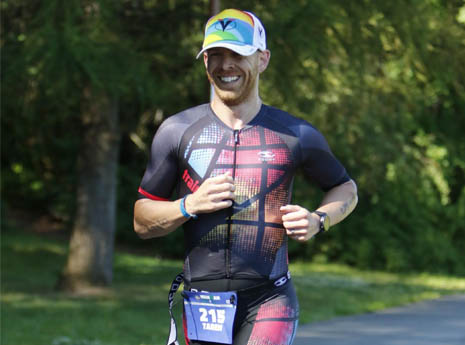
Taren Gesell was a leading global voice in triathlon, publishing the Triathlon Foundations book series and hosting the world’s largest triathlon podcast. He is a former world-ranked triathlete, record-setting marathon swimmer, and founder of the voice-AI training app MOTTIV.
Get ACTIVE on the Go


Couch to 5K®
The best way to get new runners off the couch and across the finish line of their first 5K.
Available for iOS | Android






Discuss This Article