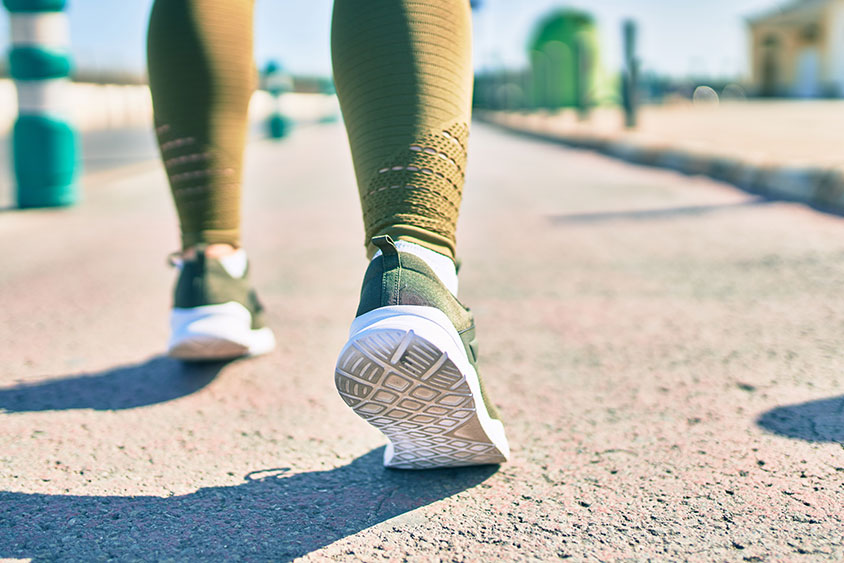
Quick answer: Walking backward, also known as retro walking, can challenge your balance, coordination, proprioception, and lower-body control in ways that forward walking does not. Beginners should start with small, controlled steps on a clear, level surface and gradually work toward one to two minutes at a time.
Walking is one of the simplest ways to stay active. But what happens when you turn around and continue walking in the same direction?
Walking backward, often called retro walking, may look a little unusual, but this simple change in direction can offer some surprising benefits. From challenging your balance and coordination to engaging your muscles differently, walking backward introduces a new element to an otherwise familiar movement. And the best part? You don’t need special equipment or a completely new workout routine to try it.
Why Trust Us?
ACTIVE.com's editorial team relies on the knowledge and experience of fitness and wellness experts, including competitive athletes, coaches, physical therapists, nutritionists, and certified trainers. This helps us ensure that the products we feature are of the highest standard. Collectively, the team has spent countless hours researching equipment, gear, and recovery tools to create the most accurate, authentic content for our readers. Customer satisfaction is also a key part of our review process, which is why we only feature highly rated products.
What Makes Walking Backward Different?
Although the movement seems simple, walking backward changes the way your body moves and responds to its surroundings. During forward walking, your heel typically contacts the ground first before your weight rolls toward your toes. When you walk backward, the pattern reverses, with your toes or the ball of your foot contacting the ground first.
This change affects how your muscles work, how your joints move, and how your body maintains stability.
Because you can’t see directly where you are going, walking backward also requires greater awareness of your body position and surroundings.
5 Benefits of Walking Backward
1. Challenges Balance and Coordination
When walking forward, your body relies on familiar movement patterns and visual information to maintain balance; walking backward changes those demands. This challenges proprioception, your body’s ability to sense its position in space, and requires greater coordination between your muscles and nervous system.
Practicing unfamiliar movement patterns can add a new challenge to your balance training, especially when done slowly and with control.
2. Engages Your Muscles Differently
Walking backward uses many of the same muscles as forward walking, including your quadriceps, hamstrings, glutes, and calves. However, the timing and demands placed on these muscles change.
Your quadriceps play an important role in controlling the knee during backward steps, while your ankles and feet adapt to a different movement pattern. Although it doesn’t replace traditional strength training, backward walking can complement your routine by challenging familiar muscles in a new way.
3. May Support Knee Health
Backward walking has gained attention in rehabilitation settings, particularly for individuals experiencing knee pain or osteoarthritis. Because backward walking changes movement mechanics, it also changes how forces are distributed through the knee.
A 2025 systematic review and meta-analysis suggests that backward walking, when combined with conventional rehabilitation, may help reduce pain and improve physical function in individuals with knee osteoarthritis. While these findings are promising, anyone experiencing knee pain or recovering from an injury should consult a healthcare professional before introducing a new exercise.
4. Improves Movement Awareness
Most of us walk without giving much thought to how our bodies move; walking backward changes that. Without being able to see directly behind you, you will need to pay closer attention to your posture, foot placement, and weight distribution. This emphasis on controlled movement can be especially appealing to those who want to improve their body awareness.
Even a few backward steps can turn an otherwise automatic movement into an opportunity to practice greater control and coordination.
5. Challenges Your Brain
Walking backward doesn’t just challenge your muscles. It also requires your brain to work differently. Unlike forward walking, which is largely automatic, moving in reverse requires greater concentration, spatial awareness, and coordination. Your brain must process unfamiliar movement patterns while helping your body maintain balance.
Research has explored the relationship between backward walking and cognitive processes such as attention and executive function. A 2022 systematic review examined this relationship specifically in people with Parkinson disease. That condition-specific research does not establish the same cognitive effects for healthy adults, but walking backward still provides an opportunity to challenge physical coordination and mental focus.
How to Start Walking Backward Safely
You don’t need to walk long distances to introduce backward walking into your routine. Start with short intervals in a safe environment.
- Find a clear, level surface. Choose an open area free of obstacles, traffic, and uneven ground.
- Use support if needed. A sturdy railing, wall, or countertop can provide additional stability.
- Take small steps. Step backward slowly, letting the ball of your foot contact the ground before lowering your heel.
- Maintain good posture. Keep your torso upright, shoulders relaxed, and movements controlled.
- Start with short intervals. Begin with a distance or duration that feels comfortable, then gradually work toward one to two minutes of continuous backward walking. Focus on good posture and controlled steps rather than increasing your speed.
Try incorporating two or three short intervals into your regular walking or exercise routine a few times per week.
Quick Tip
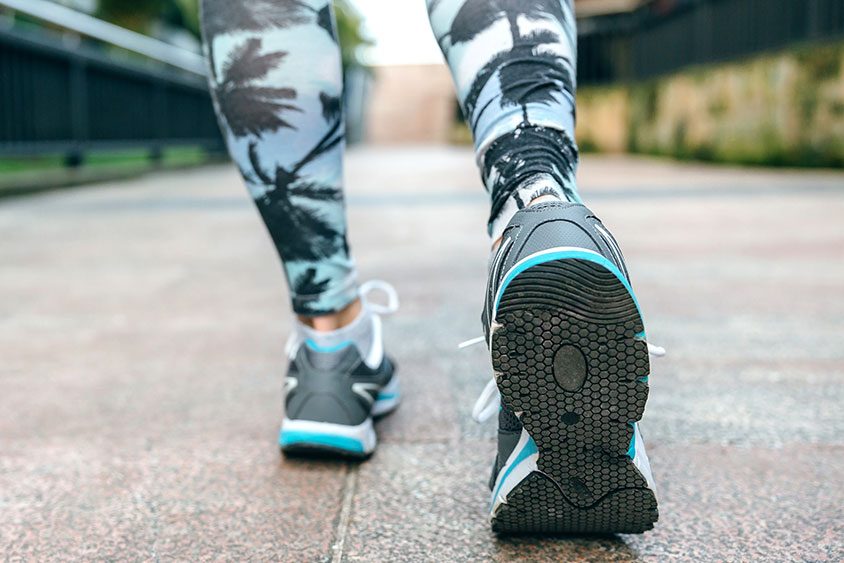
Can You Walk Backward on a Treadmill?
Although backward treadmill walking is sometimes used in fitness and rehabilitation settings, beginners should practice on solid ground first. A moving treadmill adds risk and is best used with appropriate supervision.
How to Make Walking Backward More Challenging
Once you are comfortable walking backward on a flat surface, you can increase the challenge in several ways. Start by gradually increasing your distance or duration while maintaining a steady, controlled pace. You can also vary your speed or incorporate backward walking into a larger exercise circuit.
Try a Gentle Incline
For an added challenge, try walking backward up a gentle incline. Moving uphill increases the demand on your lower-body muscles, particularly your quadriceps, and requires more effort than walking on level ground. Choose a clear, even surface and avoid steep hills.
Add Weight Carefully
For an added strength and stability challenge, experienced exercisers may try holding a light weight in front of the body while walking backward. This increases the demand on your core and postural muscles as you work to stay upright. Only attempt this progression after you can walk backward comfortably without assistance. Begin with a light weight and progress gradually, making sure you can maintain your balance and control throughout the movement. Perform weighted backward walking in a clear, supervised space.
The Takeaway
Adding variety to your fitness routine doesn’t always require new equipment or complicated exercises. Walking backward offers a simple way to challenge your balance, coordination, and lower-body control while increasing awareness of how your body moves.
You don’t need to go far or move quickly. Sometimes a few steps in a different direction are enough to introduce a fresh challenge to your routine and your body.
FAQs About Walking Backward
What are the benefits of walking backward?
Walking backward can challenge balance, coordination, proprioception, lower-body control, movement awareness, and concentration. It also changes how familiar leg muscles work, making it a useful supplemental movement for some fitness routines.
How long should you walk backward?
Beginners can start with short intervals that feel comfortable and gradually work toward one to two minutes of continuous backward walking. Prioritize controlled steps and good posture over speed or distance.
Is walking backward good for your knees?
Research suggests that backward walking may help reduce pain and improve physical function when combined with conventional rehabilitation for some people with knee osteoarthritis. Anyone with knee pain or an injury should consult a healthcare professional before adding it to a routine.
What muscles does walking backward work?
Walking backward uses the quadriceps, hamstrings, glutes, calves, ankles, and feet. The timing and demands placed on these muscles differ from forward walking, but backward walking should complement rather than replace strength training.
Can beginners walk backward on a treadmill?
Beginners should learn the movement on a clear, level surface before considering a treadmill. A moving belt adds risk, so backward treadmill walking is best performed slowly and with appropriate supervision.
Is walking backward safe for beginners?
Walking backward can be appropriate for many beginners when performed slowly on a clear, level surface. Use a railing, wall, or countertop for support if needed, and consider practicing with someone who can watch for obstacles. Stop if you experience pain, dizziness, or instability.
Sources
- Effectiveness of Backward Walking Exercises Combined With Conventional Rehabilitation Programs on Managing Pain Intensity and Disability in Patients With Knee Osteoarthritis: A Systematic Review and Meta-Analysis of Randomized Controlled Trials
- Association Between Backward Walking and Cognition in Parkinson Disease: A Systematic Review
About the Author

Kristina Duffy is a Pilates Instructor and movement specialist who helps active individuals return to pain-free movement after injury, pregnancy, or prolonged time away from sport. Working with a wide range of bodies and experience levels, she specializes in core rehabilitation, strength restoration, and sustainable training practices that support long-term performance and pain-free living. Kristina’s approach emphasizes building body awareness, reducing fear around movement, and building confident strength so clients can live and perform at their best.
Get ACTIVE on the Go


Couch to 5K®
The best way to get new runners off the couch and across the finish line of their first 5K.
Available for iOS | Android





Discuss This Article