Resistance bands prove you do not need a room full of equipment to build strength. Lightweight and portable, they can challenge your muscles from head to toe while improving stability, mobility, and coordination. Whether you are exercising at home, traveling, or looking for an alternative to weights, resistance bands offer an effective way to get a full-body workout. For more on why this simple tool works so well, see this look at the benefits of using resistance bands.
Why Trust Us?
ACTIVE.com's editorial team relies on the knowledge and experience of fitness and wellness experts, including competitive athletes, coaches, physical therapists, nutritionists, and certified trainers. This helps us ensure that the products we feature are of the highest standard. Collectively, the team has spent countless hours researching equipment, gear, and recovery tools to create the most accurate, authentic content for our readers. Customer satisfaction is also a key part of our review process, which is why we only feature highly rated products.
Resistance bands create steady tension throughout each movement, helping your muscles stay engaged from start to finish. Because they come in different resistance levels, they can be adapted for both beginners and experienced exercisers.
Before you begin, choose a band that lets you move through each exercise with control while still feeling challenged during the final few repetitions.
Wake Up Your Body
A few minutes of movement before strength training helps prepare your muscles and joints while improving your range of motion. Use your resistance band to perform gentle, controlled movements that increase circulation and activate muscles.
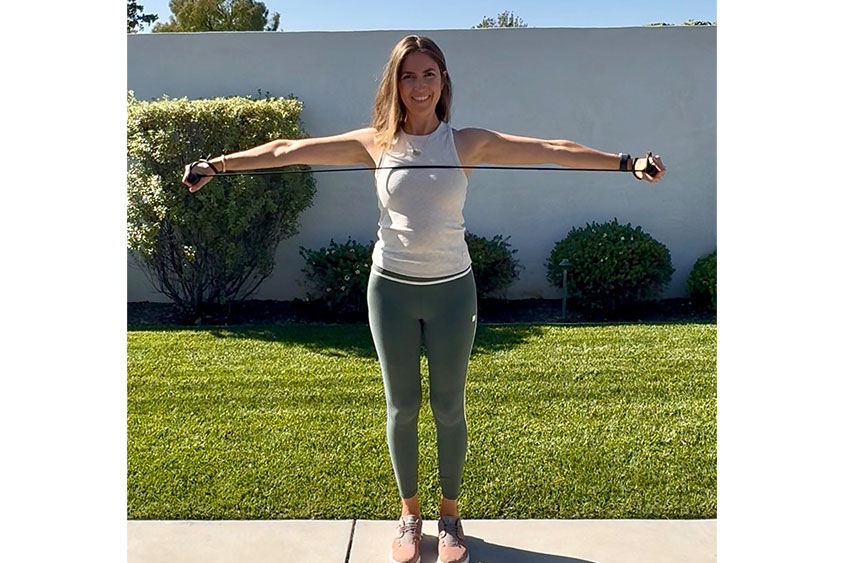
Shoulder Pass-Through
Hold the band in front of your thighs with your hands wider than shoulder-width apart. Keeping your elbows mostly straight, lift your arms overhead and behind you as far as comfortable, then reverse the motion to return to the start.
This exercise improves shoulder mobility, opens the chest, and activates the muscles of the upper back. If the movement feels restricted, widen your grip on the band until you move comfortably without pain.
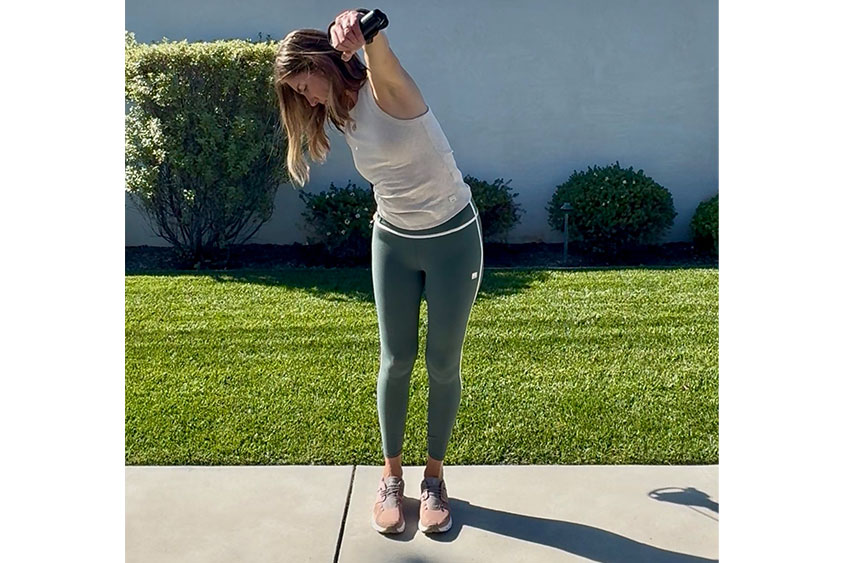
Side Bend with Rotation
With the band behind your shoulders and your arms extended, bend to one side, rotate your torso toward the floor, then return to center. Repeat on both sides to build spinal mobility and coordination through your shoulders and core.
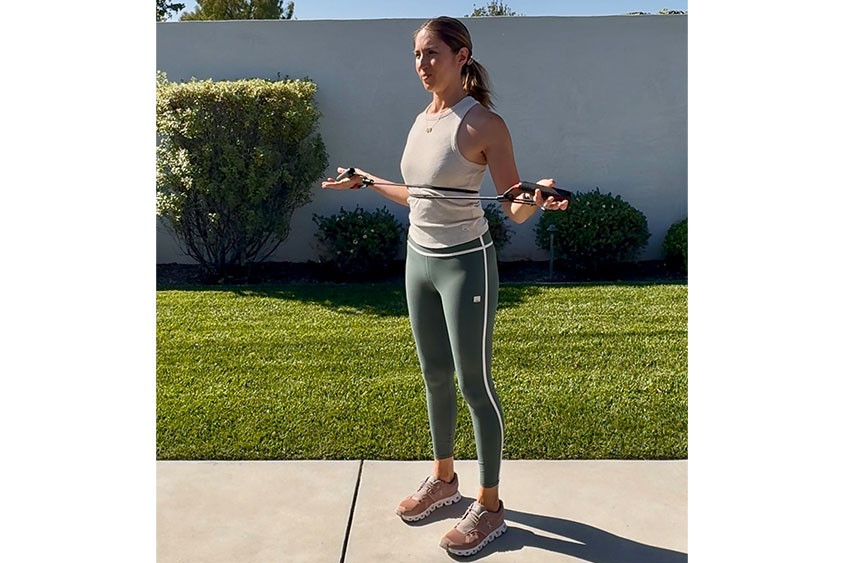
Start With Your Breath
Strength begins before your muscles contract. Wrap a resistance band around your lower ribs to help you connect with your diaphragm and deep core muscles.
As you inhale, expand your rib cage into the band. As you exhale, gently engage your abdominals and let your ribs soften. This breathing pattern supports core stability and control throughout the workout.
Strengthen Your Core
Resistance bands add an extra challenge to traditional core exercises by creating tension that works the core through control rather than momentum. They also provide feedback that can help you maintain better form.
Single Leg Stretch
Lie on your back and place one foot in the band while holding the ends with your hands. Extend the banded leg away from your body as the opposite knee bends toward your chest. Alternate sides while maintaining a stable pelvis and steady breathing.
Leg Circles
With one leg extended toward the ceiling and your foot secured in the band, slowly draw controlled circles without allowing your pelvis to rock. This exercise strengthens the hip while challenging your deep abdominal muscles to stabilize your trunk.
Build Total Body Strength
The most effective resistance band exercises often engage multiple muscle groups in a single coordinated movement. These moves help your core, arms, and legs work together instead of training each area in isolation. For more moves that combine multiple muscle groups at once, check out these full-body resistance band workouts.
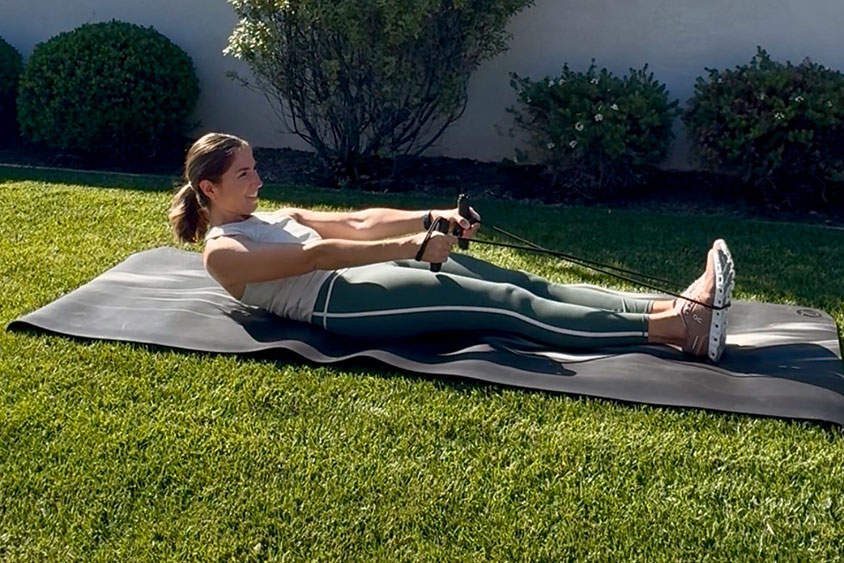
Roll Ups
Anchor the band around your feet while lying on your back. Holding one end in each hand, slowly roll up one vertebra at a time before lowering back down with control. The resistance helps activate your upper body while your core guides the movement.
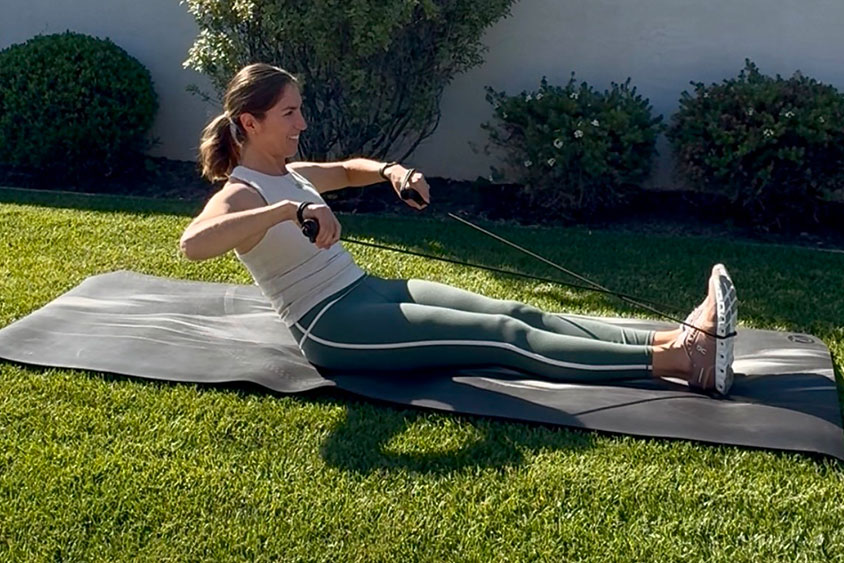
Roll Back with Alternating Row
Sit with your knees bent and your feet on the center of the band, holding one end in each hand. Lean back with a long spine, then pull one elbow behind you and rotate toward that side. Return to the center, lower with control, and repeat on the other side.
Strengthen Your Upper Body
Resistance bands are especially useful for strengthening the muscles that support your shoulders, arms, and upper back. They also encourage better posture by training controlled pulling movements. These upper-body resistance band exercises offer a few more options to add to your routine.
Crossed Band High Row
Stand in the center of the band with your feet hip-width apart, crossing the band before gripping the handles. Hinge forward with a neutral spine and soft knees, then pull your elbows up and back in line with your torso. Lower with control, keeping your neck relaxed and your shoulder blades engaged.
Band Pull Aparts
Hold the band in front of your chest with your arms straight. Pull your hands apart until the band reaches your chest, then slowly return with control. This exercise strengthens the upper back and rear shoulders, helping counteract the effects of hours spent sitting or looking at screens.
Build a Strong Foundation
Lower-body exercises with resistance bands help train strength, balance, and control while keeping the movement accessible. Focus on moving slowly and keeping steady tension through the band so your hips, legs, and core work together.
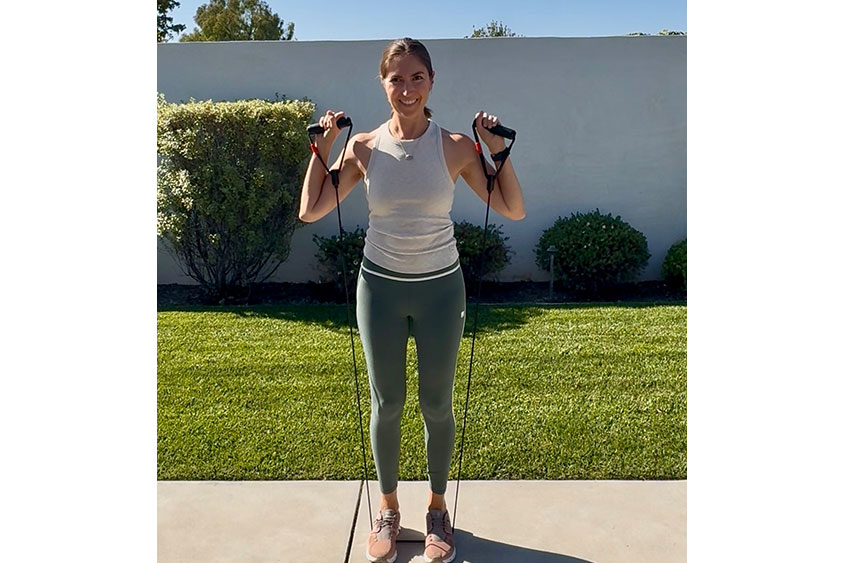
Squats
Stand in the center of the band with your feet hip-width apart and the handles at your shoulders. Bend your hips and knees to lower into a squat, then press through your feet to stand while keeping tension on the band.
Resistance band squats strengthen the glutes, quadriceps, and hamstrings while also challenging your core to stabilize your torso.
Reverse Lunge
Stand in the center of the band with your feet hip-width apart and the handles at shoulder height. Step one foot back into a reverse lunge, lowering until both knees bend about 90 degrees. Press through your front foot to stand, then repeat on one side or alternate legs.
Reverse lunges strengthen the glutes, quadriceps, and hamstrings while improving balance, coordination, and single-leg stability. Move with control and keep your front knee tracking in line with your toes. If you’re a runner looking to apply these same principles, this list of resistance band exercises for runners targets the muscles you use most on the road or trail.
How Many Repetitions Should You Do?
If you are new to resistance band training, start with 8 to 12 repetitions of each exercise for 1 to 2 sets. As your strength and endurance improve, gradually work up to 2 to 3 sets of 10 to 15 repetitions.
The Bottom Line
Resistance bands offer an easy, effective way to strengthen your entire body without bulky equipment or a gym membership. By combining mobility work, breath training, core exercises, and upper- and lower-body strengthening into one routine, you can build strength, improve posture, and move with greater confidence wherever you choose to work out. If you don’t already have a set, this guide to the best resistance bands for your workout can help you find the right one to get started.
Pick Up Some Resistance Bands From Amazon
By clicking on the product links in this article, we may receive a commission fee at no cost to you, the reader. Sponsorships and affiliate commissions help support our research so we can help you find the best products. Read full affiliate disclosure here.
About the Author

Kristina Duffy is a Pilates Instructor and movement specialist who helps active individuals return to pain-free movement after injury, pregnancy, or prolonged time away from sport. Working with a wide range of bodies and experience levels, she specializes in core rehabilitation, strength restoration, and sustainable training practices that support long-term performance and pain-free living. Kristina’s approach emphasizes building body awareness, reducing fear around movement, and building confident strength so clients can live and perform at their best.
Get ACTIVE on the Go


Couch to 5K®
The best way to get new runners off the couch and across the finish line of their first 5K.
Available for iOS | Android






Discuss This Article