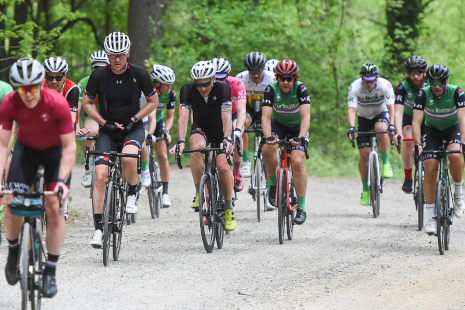
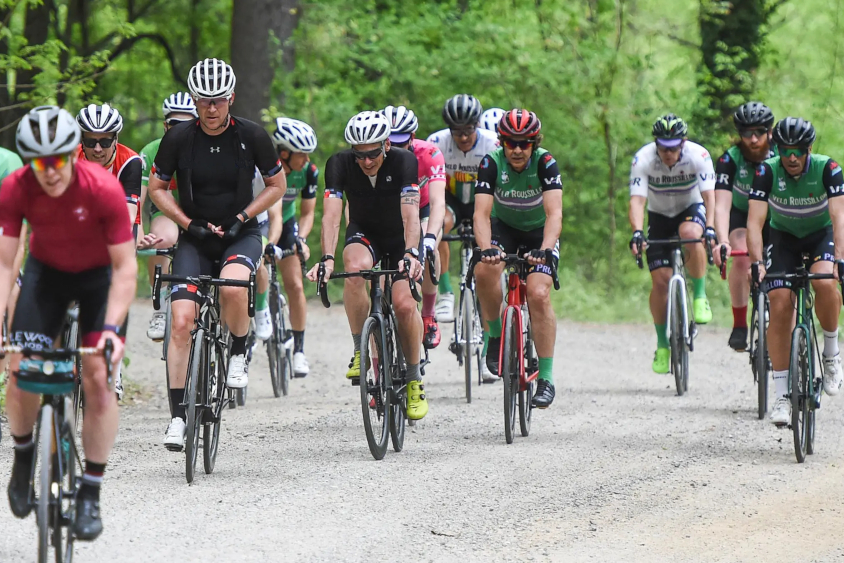
Almost every cyclist has that friend who also rides bikes, but who’s averse to group rides. Is this you?
Why Trust Us?
ACTIVE.com's editorial team relies on the knowledge and experience of fitness and wellness experts, including competitive athletes, coaches, physical therapists, nutritionists, and certified trainers. This helps us ensure that the products we feature are of the highest standard. Collectively, the team has spent countless hours researching equipment, gear, and recovery tools to create the most accurate, authentic content for our readers. Customer satisfaction is also a key part of our review process, which is why we only feature highly rated products.
Even if you’ll never pin on a number for the start of a bike race, you can learn a lot, develop bike-handling skills, ride longer and faster, and have more fun when cycling in a group.
Also, riding in a group can be much safer most of the time than riding solo. Safety in numbers—see and be seen—definitely applies to group rides!
Well-respected cycling coach Chris Carmichael recommends doing at least one group ride per week. While the need for this may vary depending on your goals, weather tolerance, and proximity to the group ride start, we think this is great advice. Carmichael notes even riding in a group of one to three others will benefit you.
Ways to learn and practice new skills on the bike
Group riding benefits endurance, fitness, and imparts bike handling skills, combined with situational awareness that’s beneficial any time you’re in the saddle, even when solo.
Hand signaling while riding in a group, to point out road hazards or upcoming turns, requires riding with one hand. So does grabbing a drink or something to eat when surrounded by other cyclists. Learning handling and control skills encourages one to feel what their bike is doing beneath them, and yields safer and more nuanced control. The more at-ease one is on a bike, the more one’s effort can be directed towards propulsion.
The situational awareness, relaxation, and comfort developed while group riding can help you navigate obstacles during solo bike commutes, or when riding on crowded multi-use paths.
Have you ever drafted another rider on your bike?
If you’ve ever ridden behind just one other rider, you’ve experienced the benefit of drafting. The greater the group size, the greater the drafting effect. This means you can conserve energy, to go faster and further.
The larger the group, the faster it can go when working together—pacelining—when everyone contributes just a little work on the front.
Many group rides employ single or double pacelining to allow for a higher sustained speed than a single rider could manage solo. When a rider finishes their turn on the front, they swing off and allow the next rider in the paceline to come through. The rider who pulls off can drift and sometimes coast to the back of the paceline, conserving energy.
The bigger the group, the longer the paceline, and the more time riders have to recover before they take their next turn on the front. This aspect makes group riding excellent for interval training (just don’t unexpectedly explode off the front of a group ride), but it’s also a great way to build endurance, sharing the work to ride longer, too.
That person who lives and breathes all things cycling
If you’ve been to a party with a cyclist who only wants to talk bike things, group rides are the perfect setting for cycling conversations. Of course, you can catch up with friends, talk about family, and the latest installment of your favorite TV streaming episodes, too. But group rides are great social situations for learning about cycling.
Even if you don’t plan to buy the latest bike, cycling computer, sports watch, or kit, you can still learn about them. And this is also an opportunity to share knowledge about plugging tires, changing tubes, and what the best drip wax is for your chain.
If you’re that guy or girl who takes pride in knowing the nuances of best tire width and optimal tire pressure, you can share your infectious knowledge with others and take comfort in helping to educate another cyclist.
This community building is one of the precious things about group rides that’s hard to recreate, even when riding virtually or indoors.
Another great aspect of group rides is the accountability that comes with committing to one. Telling people you’ll be at a meetup point for a group ride makes it more likely you’ll show up. This holds for others who, like you, will be more likely to show up if they know they will have company.
How to learn group ride etiquette
Group ride social dynamics exist to ensure riders safely finish a ride they started. Knowing how to move in a group is a key factor. One of the most important facets of group rides is understanding how to stay safe at speed.
Many group rides have unwritten rules, intended for safety. If you’re not sure about any of the silent cyclist code, just ask. We’ve never been on a group ride where others were reluctant to share tips on the route and on how to stay safe. What do hand signals mean? Do people call out motor traffic approaching from the rear? Is the ride single or double paceline, and which way are rotations? How long do you need to stay on the front, where you can download a GPX file for route navigation, and more?
Other important etiquette may not be as obvious, so if someone on a group ride suggests that “half-wheeling” is frowned upon, the comment is not a personal attack; it’s meant to keep the group moving together, predictably, safely, and consistently.
The more you group ride, the more you’ll learn, like not overlapping wheels with—nor leaving too big a gap to—the rider in front of you. And calling out potholes or other road obstacles is always appreciated; even WorldTour pro cyclists do this when racing!
Group ride do’s and don’t do's
Do's
- Ask questions about the group’s expectations
- Call out and signal road hazards
- Be predictable and communicate
- Share the work if pacelining
- Download route files in advance of the meet-up
- Strike up a conversation with different riders in the group
Don't Do's
- Half-wheel
- Overlap wheels
- Leave a gap for the rider ahead of you
- Surge off the front of a paceline
- Skip your turn on the front
- Brake or turn suddenly
About the Author







Discuss This Article